Ever found yourself typing “Per My Last Email” and wondering if there’s a better way to say it? While the phrase is common in professional communication, it can sometimes sound repetitive, passive-aggressive, or overly formal depending on the situation.
The challenge is that you often need to refer back to a previous message without sounding impatient or frustrated. And here’s the kicker: the wrong wording can affect the tone of your email and how your message is received.
Many professionals face this issue when sending follow-ups, project updates, client communications, or workplace emails. That’s why finding professional alternatives to “Per My Last Email”, polite follow-up phrases, and business email wording can make your communication clearer and more effective.
But don’t worry—there are plenty of better options.
In this guide, you’ll discover Other Ways to Say Per My Last Email, including polite, professional, and friendly alternatives for different workplace situations. You’ll also learn when to use each phrase so your emails sound confident, respectful, and easy to understand.
So if you want to improve your email etiquette, write stronger follow-ups, and communicate more professionally, keep reading—you’ll find the perfect phrase for every situation.
What Does “Per My Last Email” Mean?
“Per my last email” is a phrase used to reference information, instructions, requests, or updates that were mentioned in a previous email. It serves as a reminder and helps keep communication organized.
When to Use “Per My Last Email”
You can use this phrase when following up on unanswered messages, referring to previously shared details, clarifying information, or continuing an ongoing discussion. However, choosing a softer alternative can often make your message sound more professional and courteous.
Is It Professional/Polite to Say “Per My Last Email”?
Yes, it is professional. However, depending on the context, it may sound direct or impatient. As a result, many professionals prefer more diplomatic alternatives that maintain while encouraging cooperation.
1. As Mentioned in My Previous Email
Scenario: Referring to information already shared.
Examples:
- As mentioned in my previous email, the deadline is Friday.
- As mentioned in my previous email, the report is attached.
- As mentioned in my previous email, we need approval before moving forward.
- As mentioned in my previous email, the meeting has been rescheduled.
- As mentioned in my previous email, the budget was updated.
Tone: Professional and courteous.
Best Use: Formal business communication.
2. As Noted Earlier
Scenario: Briefly reminding someone of prior information.
Examples:
- As noted earlier, the project timeline has changed.
- As noted earlier, the documents are available for review.
- As noted earlier, the proposal was submitted yesterday.
- As noted earlier, the team is awaiting feedback.
- As noted earlier, the event starts at 10 a.m.
Tone: Concise and professional.
Best Use: Internal workplace communication.
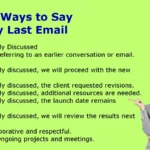
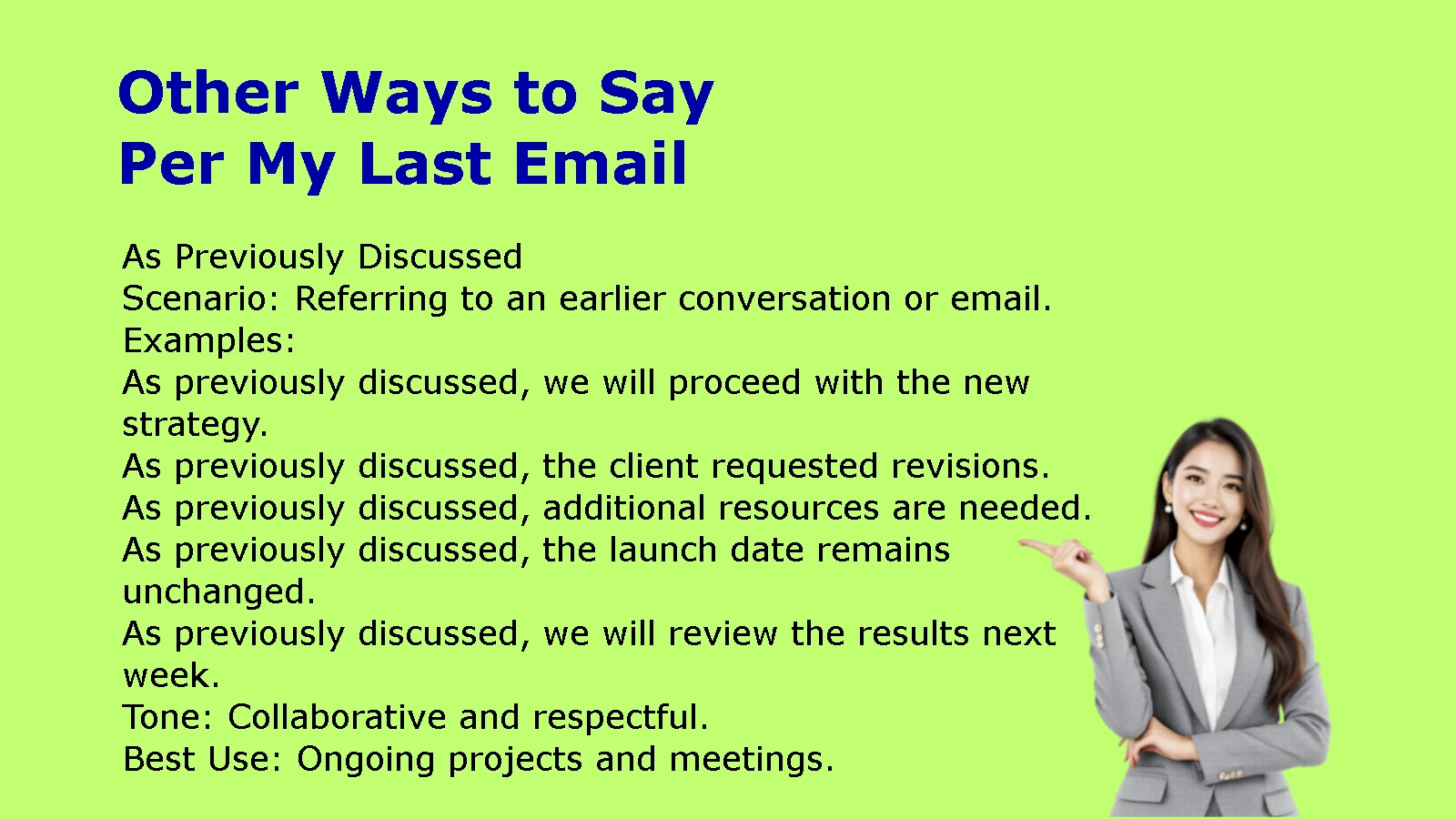
3. As Previously Discussed
Scenario: Referring to an earlier conversation or email.
Examples:
- As previously discussed, we will proceed with the new strategy.
- As previously discussed, the client requested revisions.
- As previously discussed, additional resources are needed.
- As previously discussed, the launch date remains unchanged.
- As previously discussed, we will review the results next week.
Tone: Collaborative and respectful.
Best Use: Ongoing projects and meetings.
4. As Referenced Below
Scenario: Directing attention to earlier details.
Examples:
- As referenced below, the schedule has been updated.
- As referenced below, the requested files are attached.
- As referenced below, the policy changes take effect next month.
- As referenced below, all approvals have been received.
- As referenced below, the pricing details remain the same.
Tone: Formal and organized.
Best Use: Detailed email threads.
5. Following Up on My Earlier Email
Scenario: Checking on an unanswered message.
Examples:
- Following up on my earlier email regarding the proposal.
- Following up on my earlier email about the meeting agenda.
- Following up on my earlier email concerning the contract.
- Following up on my earlier email for your feedback.
- Following up on my earlier email to confirm receipt.
Tone: Polite and proactive.
Best Use: Follow-up emails.
6. As Shared Previously
Scenario: Referring to information already provided.
Examples:
- As shared previously, the presentation is complete.
- As shared previously, the project plan was approved.
- As shared previously, the files are stored in the shared folder.
- As shared previously, the budget has increased.
- As shared previously, the timeline was extended.
Tone: Friendly and professional.
Best Use: Team communication.
7. As Highlighted in My Earlier Message
Scenario: Emphasizing important information.
Examples:
- As highlighted in my earlier message, action is required by Friday.
- As highlighted in my earlier message, the issue remains unresolved.
- As highlighted in my earlier message, approval is still pending.
- As highlighted in my earlier message, the proposal needs review.
- As highlighted in my earlier message, resources are limited.
Tone: Professional and clear.
Best Use: Important reminders.
8. As Indicated Previously
Scenario: Referring to earlier instructions.
Examples:
- As indicated previously, the deadline is approaching.
- As indicated previously, all submissions must be completed online.
- As indicated previously, the meeting location has changed.
- As indicated previously, payment is due this week.
- As indicated previously, updates will be provided monthly.
Tone: Formal and direct.
Best Use: Business correspondence.
9. To Reiterate
Scenario: Restating key information.
Examples:
- To reiterate, the final version is due tomorrow.
- To reiterate, all attendees must register in advance.
- To reiterate, approval is required before implementation.
- To reiterate, the policy applies to all departments.
- To reiterate, the deadline cannot be extended.
Tone: Clear and firm.
Best Use: Important instructions.
10. As Previously Mentioned
Scenario: Referencing earlier communication.
Examples:
- As previously mentioned, the project is on schedule.
- As previously mentioned, additional testing is required.
- As previously mentioned, the contract has been finalized.
- As previously mentioned, training begins next week.
- As previously mentioned, the report is attached.
Tone: Neutral and professional.
Best Use: Everyday workplace emails.
11. As Outlined in My Earlier Email
Scenario: Referring to detailed information.
Examples:
- As outlined in my earlier email, the project phases are listed below.
- As outlined in my earlier email, the requirements remain unchanged.
- As outlined in my earlier email, all milestones were approved.
- As outlined in my earlier email, the process must be followed carefully.
- As outlined in my earlier email, the schedule has been finalized.
Tone: Structured and professional.
Best Use: Project management communication.
12. As Explained Earlier
Scenario: Clarifying previously provided information.
Examples:
- As explained earlier, the delay was caused by technical issues.
- As explained earlier, approval is needed first.
- As explained earlier, the budget was adjusted.
- As explained earlier, the process has several stages.
- As explained earlier, the request is under review.
Tone: Informative and respectful.
Best Use: Clarifications and updates.
13. Referring to My Previous Message
Scenario: Drawing attention to a past email.
Examples:
- Referring to my previous message, please review the attachment.
- Referring to my previous message, we need your confirmation.
- Referring to my previous message, the deadline remains the same.
- Referring to my previous message, the requested information is included.
- Referring to my previous message, the issue has been resolved.
Tone: Professional and neutral.
Best Use: Formal follow-ups.
14. As Covered Earlier
Scenario: Revisiting discussed points.
Examples:
- As covered earlier, the project will begin next month.
- As covered earlier, the budget requires approval.
- As covered earlier, all documents must be submitted online.
- As covered earlier, training sessions are mandatory.
- As covered earlier, feedback is welcome.
Tone: Conversational yet professional.
Best Use: Team discussions.
15. As Stated Before
Scenario: Reminding someone of a previous statement.
Examples:
- As stated before, the deadline is Friday.
- As stated before, the proposal needs approval.
- As stated before, all attendees must register.
- As stated before, the report has been submitted.
- As stated before, changes are effective immediately.
Tone: Direct and clear.
Best Use: Repeated reminders.
16. In Reference to My Earlier Email
Scenario: Referring to previously shared information in a formal setting.
Examples:
- In reference to my earlier email, the requested documents are attached.
- In reference to my earlier email, please review the updated proposal.
- In reference to my earlier email, we are awaiting your approval.
- In reference to my earlier email, the deadline remains unchanged.
- In reference to my earlier email, kindly confirm receipt.
Tone: Formal and professional.
Best Use: Client communication and official correspondence.
17. As Communicated Previously
Scenario: Reminding someone about information already shared.
Examples:
- As communicated previously, the launch date has been finalized.
- As communicated previously, all team members must complete training.
- As communicated previously, the budget has been approved.
- As communicated previously, the project is moving into the next phase.
- As communicated previously, feedback is due by Friday.
Tone: Corporate and polished.
Best Use: Executive and business communication.
18. As Detailed Earlier
Scenario: Referring to information that was explained thoroughly.
Examples:
- As detailed earlier, the implementation plan includes three stages.
- As detailed earlier, the proposal outlines all project costs.
- As detailed earlier, the requirements have already been approved.
- As detailed earlier, the timeline remains on track.
- As detailed earlier, additional resources will be needed.
Tone: Structured and informative.
Best Use: Project updates and reports.
19. As Pointed Out Previously
Scenario: Highlighting information that may have been overlooked.
Examples:
- As pointed out previously, the issue requires immediate attention.
- As pointed out previously, approval is still pending.
- As pointed out previously, the deadline is approaching.
- As pointed out previously, the client requested revisions.
- As pointed out previously, the documents were shared last week.
Tone: Firm but professional.
Best Use: Follow-ups and clarifications.
20. As Addressed in My Prior Email
Scenario: Referring to a topic already covered.
Examples:
- As addressed in my prior email, the contract has been finalized.
- As addressed in my prior email, all stakeholders have been informed.
- As addressed in my prior email, the meeting was rescheduled.
- As addressed in my prior email, the proposal is attached.
- As addressed in my prior email, no further action is required.
Tone: Formal and respectful.
Best Use: Professional follow-ups.
21. As Discussed Earlier
Scenario: Referencing a previous discussion.
Examples:
- As discussed earlier, we will proceed with the new strategy.
- As discussed earlier, the report will be completed this week.
- As discussed earlier, the budget has been adjusted.
- As discussed earlier, training sessions begin Monday.
- As discussed earlier, additional testing is required.
Tone: Friendly and collaborative.
Best Use: Team projects and meetings.
22. As Mentioned Before
Scenario: Casual reminder of prior information.
Examples:
- As mentioned before, the deadline is Friday.
- As mentioned before, the files are available online.
- As mentioned before, the meeting starts at 9 a.m.
- As mentioned before, the proposal needs approval.
- As mentioned before, we are waiting for feedback.
Tone: Simple and professional.
Best Use: Everyday workplace emails.
23. As Covered in My Earlier Message
Scenario: Revisiting information from a previous email.
Examples:
- As covered in my earlier message, the project scope has expanded.
- As covered in my earlier message, the schedule was updated.
- As covered in my earlier message, the budget has been approved.
- As covered in my earlier message, all tasks are assigned.
- As covered in my earlier message, the next steps are outlined below.
Tone: Professional and organized.
Best Use: Long email threads.
24. In Follow-Up to My Previous Email
Scenario: Checking on an unanswered message.
Examples:
- In follow-up to my previous email, I wanted to check on the status.
- In follow-up to my previous email, please provide an update.
- In follow-up to my previous email, have you had a chance to review the proposal?
- In follow-up to my previous email, we are awaiting confirmation.
- In follow-up to my previous email, kindly share your feedback.
Tone: Polite and proactive.
Best Use: Follow-up communication.
25. As Previously Shared
Scenario: Referring to information already provided.
Examples:
- As previously shared, the presentation is attached.
- As previously shared, the deadline is next week.
- As previously shared, the project is on schedule.
- As previously shared, the policy changes take effect soon.
- As previously shared, the client approved the proposal.
Tone: Warm and professional.
Best Use: Internal communications.
26. As Clarified Earlier
Scenario: Reinforcing a previous explanation.
Examples:
- As clarified earlier, the budget excludes travel expenses.
- As clarified earlier, approval is required before launch.
- As clarified earlier, the deadline cannot be extended.
- As clarified earlier, all requests must be submitted online.
- As clarified earlier, additional testing is necessary.
Tone: Informative and respectful.
Best Use: Correcting misunderstandings.
27. As Noted in My Prior Message
Scenario: Referring to a specific point in a previous email.
Examples:
- As noted in my prior message, the documents are attached.
- As noted in my prior message, the timeline was revised.
- As noted in my prior message, the proposal requires approval.
- As noted in my prior message, the meeting location changed.
- As noted in my prior message, feedback is requested.
Tone: Formal and concise.
Best Use: Business correspondence.
28. As Brought Up Earlier
Scenario: Casual workplace communication.
Examples:
- As brought up earlier, we need approval before proceeding.
- As brought up earlier, the deadline is next Monday.
- As brought up earlier, the report requires revisions.
- As brought up earlier, additional resources are needed.
- As brought up earlier, the issue remains unresolved.
Tone: Conversational and professional.
Best Use: Internal team emails.
29. As Recorded in My Previous Email
Scenario: Referring to documented information.
Examples:
- As recorded in my previous email, all requirements were provided.
- As recorded in my previous email, the budget was approved.
- As recorded in my previous email, the timeline was updated.
- As recorded in my previous email, the meeting notes are attached.
- As recorded in my previous email, the proposal was submitted.
Tone: Formal and precise.
Best Use: Documentation-heavy communication.
30. As Previously Confirmed
Scenario: Reminding someone of an agreed-upon detail.
Examples:
- As previously confirmed, the meeting will take place on Thursday.
- As previously confirmed, the contract terms remain unchanged.
- As previously confirmed, the delivery date is June 15.
- As previously confirmed, the project has been approved.
- As previously confirmed, the budget allocation was finalized.
Tone: Professional and confident.
Best Use: Client communication and agreements.
31. As Mentioned in My Earlier Correspondence
Scenario: Formal reference to prior communication.
Examples:
- As mentioned in my earlier correspondence, the proposal is attached.
- As mentioned in my earlier correspondence, the timeline remains unchanged.
- As mentioned in my earlier correspondence, approval is pending.
- As mentioned in my earlier correspondence, the meeting has been confirmed.
- As mentioned in my earlier correspondence, all details were provided.
Tone: Formal and polished.
Best Use: Professional business emails.
32. As Previously Outlined
Scenario: Referring to plans or procedures.
Examples:
- As previously outlined, the project will proceed in phases.
- As previously outlined, all deliverables are due next month.
- As previously outlined, additional resources are required.
- As previously outlined, the implementation strategy remains the same.
- As previously outlined, training will begin next week.
Tone: Structured and professional.
Best Use: Project management communication.
33. As Referenced in My Earlier Email
Scenario: Directing attention to prior information.
Examples:
- As referenced in my earlier email, the documents are attached.
- As referenced in my earlier email, the budget has been approved.
- As referenced in my earlier email, the deadline is approaching.
- As referenced in my earlier email, the proposal needs review.
- As referenced in my earlier email, the meeting agenda was shared.
Tone: Professional and clear.
Best Use: Formal reminders.
34. As We Previously Discussed
Scenario: Referring to a shared conversation.
Examples:
- As we previously discussed, the launch date is set.
- As we previously discussed, revisions are required.
- As we previously discussed, the contract is ready for signing.
- As we previously discussed, the budget was finalized.
- As we previously discussed, the next phase begins Monday.
Tone: Collaborative and friendly.
Best Use: Team and client communication.
35. As Previously Advised
Scenario: Referring to instructions already given.
Examples:
- As previously advised, all forms must be completed.
- As previously advised, approval is required first.
- As previously advised, the deadline cannot be changed.
- As previously advised, the documents should be submitted online.
- As previously advised, updates will be provided weekly.
Tone: Formal and authoritative.
Best Use: Administrative communication.
36. As Shared in My Earlier Email
Scenario: Referencing previously sent information.
Examples:
- As shared in my earlier email, the files are attached.
- As shared in my earlier email, the timeline was revised.
- As shared in my earlier email, the project remains on schedule.
- As shared in my earlier email, all approvals have been received.
- As shared in my earlier email, the proposal was updated.
Tone: Professional and approachable.
Best Use: Workplace communication.
37. As Indicated in My Previous Message
Scenario: Referring to a specific point.
Examples:
- As indicated in my previous message, the meeting starts at 10 a.m.
- As indicated in my previous message, the deadline is Friday.
- As indicated in my previous message, revisions are necessary.
- As indicated in my previous message, the contract has been finalized.
- As indicated in my previous message, additional testing is required.
Tone: Formal and direct.
Best Use: Business correspondence.
38. As We Covered Earlier
Scenario: Revisiting an earlier topic.
Examples:
- As we covered earlier, the budget was approved.
- As we covered earlier, the proposal requires review.
- As we covered earlier, the project is progressing well.
- As we covered earlier, all deliverables are on track.
- As we covered earlier, the meeting was rescheduled.
Tone: Friendly and conversational.
Best Use: Team communication.
39. As Previously Stated
Scenario: Repeating an important point.
Examples:
- As previously stated, the deadline remains unchanged.
- As previously stated, all participants must register.
- As previously stated, approval is required before launch.
- As previously stated, the report is attached.
- As previously stated, the policy takes effect next month.
Tone: Clear and professional.
Best Use: Important reminders.
40. As Mentioned in My Prior Email
Scenario: Direct reference to a past email.
Examples:
- As mentioned in my prior email, the documents are attached.
- As mentioned in my prior email, feedback is requested.
- As mentioned in my prior email, the timeline has been updated.
- As mentioned in my prior email, approval is pending.
- As mentioned in my prior email, the proposal was submitted.
Tone: Professional and courteous.
Best Use: Formal follow-ups.
41. As Previously Provided
Scenario: Referring to information already sent.
Examples:
- As previously provided, the report contains all required details.
- As previously provided, the budget breakdown is attached.
- As previously provided, the proposal includes updated pricing.
- As previously provided, the schedule has been finalized.
- As previously provided, the contract is ready for review.
Tone: Formal and informative.
Best Use: Documentation and reports.
42. As Explained in My Earlier Email
Scenario: Clarifying a previously discussed point.
Examples:
- As explained in my earlier email, the delay was unavoidable.
- As explained in my earlier email, approval is needed first.
- As explained in my earlier email, the process includes three stages.
- As explained in my earlier email, the requirements remain unchanged.
- As explained in my earlier email, additional testing is necessary.
Tone: Helpful and professional.
Best Use: Clarifications and updates.
43. As Previously Noted
Scenario: Briefly referencing past information.
Examples:
- As previously noted, the deadline is approaching.
- As previously noted, the files were uploaded yesterday.
- As previously noted, revisions are required.
- As previously noted, the budget has been approved.
- As previously noted, feedback is welcome.
Tone: Concise and professional.
Best Use: Quick reminders.
44. As Highlighted Previously
Scenario: Drawing attention to key information.
Examples:
- As highlighted previously, the project requires immediate action.
- As highlighted previously, the client requested revisions.
- As highlighted previously, all approvals are complete.
- As highlighted previously, the deadline is Friday.
- As highlighted previously, the proposal needs review.
Tone: Clear and focused.
Best Use: Important follow-ups.
45. As Included in My Earlier Email
Scenario: Referring to attachments or details.
Examples:
- As included in my earlier email, the contract is attached.
- As included in my earlier email, the timeline has been updated.
- As included in my earlier email, the proposal outlines all costs.
- As included in my earlier email, meeting notes are available.
- As included in my earlier email, the requested files were shared.
Tone: Professional and informative.
Best Use: Emails with attachments.
46. As Previously Reviewed
Scenario: Referring to information already examined.
Examples:
- As previously reviewed, the project is on schedule.
- As previously reviewed, the budget was approved.
- As previously reviewed, the proposal meets all requirements.
- As previously reviewed, the implementation plan is finalized.
- As previously reviewed, no additional changes are needed.
Tone: Formal and confident.
Best Use: Project reviews and approvals.
47. As Previously Brought to Your Attention
Scenario: Emphasizing an earlier communication.
Examples:
- As previously brought to your attention, the deadline is nearing.
- As previously brought to your attention, approval is still pending.
- As previously brought to your attention, the issue remains unresolved.
- As previously brought to your attention, the requested documents were sent.
- As previously brought to your attention, immediate action is recommended.
Tone: Professional and assertive.
Best Use: Escalations and important follow-ups.
Conclusion
Although “per my last email” is widely used in professional communication, relying on it too often can make emails feel repetitive or overly direct. Therefore, using alternatives such as “as previously discussed,” “following up on my earlier email,” or “as mentioned in my prior email” can help you sound more polished and courteous. Furthermore, these alternatives allow you to maintain while keeping conversations positive and productive. Ultimately, choosing the right phrase can improve communication, strengthen workplace relationships, and encourage timely responses.