
Ever heard someone say Other Ways to Say “look out” and wondered if there’s a more natural or expressive way to say it? In real-life conversations, this simple phrase can feel too generic when you’re trying to warn someone, grab attention, or react quickly in a situation.
The problem is, “look out” works—but it often lacks emotion or context. And here’s the kicker: depending on the situation, using the wrong tone can make your warning sound either too mild or unnecessarily dramatic.
Many people run into this issue in daily communication. That’s why they search for alternative ways to warn someone, different phrases for giving alerts, or expressions for telling someone to be careful that sound more natural and fitting.
But don’t worry—there’s a better way to handle it.
In this guide, you’ll discover Other Ways to Say “look out”, including urgent warnings, casual alerts, and more polite expressions you can use in conversations, messages, or real-time reactions. You’ll also learn how small changes in wording can make your communication clearer and more effective.
So if you want to upgrade your warning phrases and sound more natural in everyday English, keep reading—you’re in the right place.
What Does “Look Out” Mean?
“Look out” is a warning phrase used to tell someone to be careful, pay attention, or avoid danger. It can also mean being alert to something happening nearby.
It is often used in sudden or urgent situations, but it can also be softened depending on tone and context.
When to Use “Look Out”
You can use “look out” when:
- Someone is in immediate or potential danger
- You want to warn someone quickly
- You are calling attention to something important
- You are reacting to a sudden situation
It works in both casual speech and urgent communication.
Is It Professional or Polite to Say “Look Out”?
Yes, but it depends on context. In professional settings, “look out” may sound too informal or abrupt. Instead, softer alternatives like “please be careful” or “watch your step” are often preferred.
1. Watch Out
Scenario: Immediate warning in casual situations
Examples:
- Watch out! There’s a car coming.
- Watch out for that slippery floor.
- Watch out behind you!
- Watch out—it’s hot.
- Watch out for falling objects.
Tone: Alert, urgent, direct
Best Use: Everyday warnings in casual speech
2. Be Careful
Scenario: General caution
Examples:
- Be careful while crossing the road.
- Be careful with that knife.
- Be careful on the stairs.
- Be careful—it’s icy outside.
- Be careful during your trip.
Tone: Calm, polite, caring
Best Use: Formal and informal situations
3. Watch Your Step
Scenario: Physical movement hazards
Examples:
- Watch your step on the wet floor.
- Watch your step going down the stairs.
- Watch your step near the edge.
- Watch your step—it’s uneven here.
- Watch your step in the dark.
Tone: Polite, cautious
Best Use: Public places or guiding someone
4. Take Care
Scenario: General safety or farewell warning
Examples:
- Take care on your way home.
- Take care while driving.
- Take care—it’s crowded today.
- Take care of yourself out there.
- Take care during the storm.
Tone: Warm, friendly
Best Use: Conversations and goodbyes
5. Heads Up
Scenario: Giving advance warning
Examples:
- Heads up, the meeting has been moved.
- Heads up—there’s a delay ahead.
- Heads up, they’re coming your way.
- Heads up for changes in the schedule.
- Heads up: it might rain later.
Tone: Casual, informative
Best Use: Workplace or texting
6. Stay Alert
Scenario: Situational awareness
Examples:
- Stay alert in crowded areas.
- Stay alert during the hike.
- Stay alert while driving at night.
- Stay alert for updates.
- Stay alert near traffic.
Tone: Serious, focused
Best Use: Safety instructions or warnings
7. Be Alert
Scenario: Similar to “stay alert”
Examples:
- Be alert when crossing the street.
- Be alert in unfamiliar places.
- Be alert during the event.
- Be alert for any changes.
- Be alert in heavy traffic.
Tone: Formal, instructive
Best Use: Training or safety guidance
8. Look Out for That
Scenario: Specific warning
Examples:
- Look out for that hole in the ground.
- Look out for that car.
- Look out for that branch.
- Look out for that sign.
- Look out for that obstacle.
Tone: Direct, situational
Best Use: Real-time warnings
9. Mind Out
Scenario: British informal warning
Examples:
- Mind out! There’s a step.
- Mind out for the puddle.
- Mind out—you’re in the way.
- Mind out for traffic.
- Mind out near the edge.
Tone: Casual, regional
Best Use: Informal UK-style speech
10. Stay Safe
Scenario: Caring warning or farewell
Examples:
- Stay safe on your journey.
- Stay safe during the storm.
- Stay safe out there.
- Stay safe while traveling.
- Stay safe in the crowd.
Tone: Warm, caring
Best Use: Goodbyes and messages
11. Be Aware
Scenario: Informational caution
Examples:
- Be aware of your surroundings.
- Be aware of traffic rules.
- Be aware of the risks.
- Be aware while walking alone.
- Be aware of changes ahead.
Tone: Neutral, informative
Best Use: Instructions and advice
12. Watch Closely
Scenario: Attention-focused warning
Examples:
- Watch closely for any movement.
- Watch closely near the road.
- Watch closely during the process.
- Watch closely for signals.
- Watch closely in crowded areas.
Tone: Observational
Best Use: Teaching or guiding
13. Look Sharp
Scenario: Quick attention alert
Examples:
- Look sharp! The bus is coming.
- Look sharp—it’s starting now.
- Look sharp, we’re late.
- Look sharp in that area.
- Look sharp for the signal.
Tone: Urgent, energetic
Best Use: Quick reactions
14. Keep an Eye Out
Scenario: Ongoing attention
Examples:
- Keep an eye out for danger.
- Keep an eye out for updates.
- Keep an eye out for your bag.
- Keep an eye out while driving.
- Keep an eye out for him.
Tone: Observant, casual
Best Use: Monitoring situations
15. Stay Vigilant
Scenario: Serious or high-risk situations
Examples:
- Stay vigilant in crowded places.
- Stay vigilant during travel.
- Stay vigilant at night.
- Stay vigilant in public transport.
- Stay vigilant for scams.
Tone: Serious, formal
Best Use: Security or safety contexts
16. Don’t Miss That
Scenario: Attention reminder
Examples:
- Don’t miss that step.
- Don’t miss that sign.
- Don’t miss that turn.
- Don’t miss that warning.
- Don’t miss that message.
Tone: Informal, guiding
Best Use: Directions or instructions
17. Careful There
Scenario: Gentle warning
Examples:
- Careful there, it’s slippery.
- Careful there on the stairs.
- Careful there near the edge.
- Careful there, it’s wet.
- Careful there while stepping.
Tone: Friendly, soft
Best Use: Everyday conversation
18. Pay Attention
Scenario: Focus instruction
Examples:
- Pay attention to the road.
- Pay attention while walking.
- Pay attention to the signs.
- Pay attention in traffic.
- Pay attention to instructions.
Tone: Neutral, instructive
Best Use: Teaching or guiding
19. Keep Alert
Scenario: Continuous awareness
Examples:
- Keep alert in busy areas.
- Keep alert during travel.
- Keep alert at night.
- Keep alert in crowds.
- Keep alert for updates.
Tone: Formal, safety-focused
Best Use: Security awareness
20. Watch It
Scenario: Quick warning
Examples:
- Watch it! That’s hot.
- Watch it near the edge.
- Watch it—you almost fell.
- Watch it on the road.
- Watch it carefully.
Tone: Sharp, urgent
Best Use: Immediate warnings
21. Heads Up There
Scenario: Quick situational warning
Examples:
- Heads up there, the floor is wet.
- Heads up there, step carefully.
- Heads up there, traffic is moving fast.
- Heads up there, don’t rush.
- Heads up there, it’s crowded.
Tone: Casual, alert
Best Use: Everyday quick warnings
22. Stay on Guard
Scenario: Protective or security-focused
Examples:
- Stay on guard in crowded places.
- Stay on guard during travel.
- Stay on guard at night.
- Stay on guard against scams.
- Stay on guard in unfamiliar areas.
Tone: Serious, protective
Best Use: Safety or security advice
23. Keep Your Eyes Open
Scenario: General awareness
Examples:
- Keep your eyes open while walking.
- Keep your eyes open for traffic.
- Keep your eyes open in crowds.
- Keep your eyes open for signs.
- Keep your eyes open during the trip.
Tone: Friendly, cautious
Best Use: Travel or daily awareness
24. Be Mindful
Scenario: Thoughtful caution
Examples:
- Be mindful of your surroundings.
- Be mindful when driving.
- Be mindful on the stairs.
- Be mindful of others nearby.
- Be mindful in busy areas.
Tone: Polite, reflective
Best Use: Professional or respectful tone
25. Take Precaution
Scenario: Preventive warning
Examples:
- Take precaution on icy roads.
- Take precaution while traveling.
- Take precaution near construction.
- Take precaution during storms.
- Take precaution with sharp tools.
Tone: Formal, safety-focused
Best Use: Instructions or safety advice
26. Don’t Get Caught Off Guard
Scenario: Unexpected situations
Examples:
- Don’t get caught off guard by traffic.
- Don’t get caught off guard by delays.
- Don’t get caught off guard by changes.
- Don’t get caught off guard during exams.
- Don’t get caught off guard at night.
Tone: Informative, cautionary
Best Use: Advice or preparation
27. Stay Cautious
Scenario: General risk awareness
Examples:
- Stay cautious while walking alone.
- Stay cautious in crowded places.
- Stay cautious during travel.
- Stay cautious near traffic.
- Stay cautious at night.
Tone: Serious, protective
Best Use: Safety guidance
28. Be Watchful
Scenario: Continuous observation
Examples:
- Be watchful of your surroundings.
- Be watchful near traffic.
- Be watchful in crowds.
- Be watchful for danger.
- Be watchful while traveling.
Tone: Formal, alert
Best Use: Security or awareness contexts
29. Stay Sharp
Scenario: Quick awareness and focus
Examples:
- Stay sharp on the road.
- Stay sharp during travel.
- Stay sharp in busy areas.
- Stay sharp while working outside.
- Stay sharp in crowds.
Tone: Energetic, alert
Best Use: Fast-paced or active situations
30. Look Ahead
Scenario: Preventive awareness
Examples:
- Look ahead while driving.
- Look ahead for obstacles.
- Look ahead on the road.
- Look ahead before crossing.
- Look ahead for changes.
Tone: Calm, thoughtful
Best Use: Driving or movement safety
31. Keep Watch
Scenario: Monitoring something or someone
Examples:
- Keep watch on the area.
- Keep watch for danger.
- Keep watch while I’m gone.
- Keep watch on the kids.
- Keep watch near the gate.
Tone: Serious, responsible
Best Use: Security or supervision
32. Stay Tuned and Alert
Scenario: Informational warning
Examples:
- Stay tuned and alert for updates.
- Stay tuned and alert for changes.
- Stay tuned and alert during travel.
- Stay tuned and alert for signals.
- Stay tuned and alert in crowds.
Tone: Informative, formal
Best Use: Announcements or alerts
33. Be on the Lookout
Scenario: Searching or watching for something
Examples:
- Be on the lookout for danger.
- Be on the lookout for traffic.
- Be on the lookout for signs.
- Be on the lookout for updates.
- Be on the lookout for him.
Tone: Alert, active
Best Use: Monitoring or searching
34. Don’t Ignore That
Scenario: Important warning
Examples:
- Don’t ignore that warning sign.
- Don’t ignore that sound.
- Don’t ignore that message.
- Don’t ignore that car.
- Don’t ignore that signal.
Tone: Direct, serious
Best Use: Urgent attention requests
35. Watch Carefully
Scenario: Detailed attention
Examples:
- Watch carefully where you step.
- Watch carefully during crossing.
- Watch carefully for traffic.
- Watch carefully in crowds.
- Watch carefully while driving.
Tone: Calm, instructive
Best Use: Teaching or guiding
36. Stay Aware
Scenario: General awareness
Examples:
- Stay aware of your surroundings.
- Stay aware while walking.
- Stay aware in crowds.
- Stay aware of traffic.
- Stay aware of risks.
Tone: Neutral, informative
Best Use: Everyday safety advice
37. Be on Alert
Scenario: Elevated attention
Examples:
- Be on alert in crowded areas.
- Be on alert during travel.
- Be on alert at night.
- Be on alert for updates.
- Be on alert in emergencies.
Tone: Serious, formal
Best Use: Security or emergency situations
38. Watch Your Surroundings
Scenario: Environmental awareness
Examples:
- Watch your surroundings in crowds.
- Watch your surroundings while walking.
- Watch your surroundings at night.
- Watch your surroundings near traffic.
- Watch your surroundings during travel.
Tone: Cautious, practical
Best Use: Safety awareness
39. Keep an Eye Open
Scenario: Informal observation
Examples:
- Keep an eye open for danger.
- Keep an eye open for updates.
- Keep an eye open for signs.
- Keep an eye open for him.
- Keep an eye open for traffic.
Tone: Casual, alert
Best Use: Friendly conversations
40. Don’t Slip Up
Scenario: Preventing mistakes or accidents
Examples:
- Don’t slip up on the stairs.
- Don’t slip up while walking.
- Don’t slip up during the task.
- Don’t slip up in traffic.
- Don’t slip up near the edge.
Tone: Casual, cautionary
Best Use: Informal warnings
41. Stay Focused
Scenario: Attention and concentration
Examples:
- Stay focused on the road.
- Stay focused while walking.
- Stay focused in crowds.
- Stay focused during driving.
- Stay focused on your path.
Tone: Neutral, instructive
Best Use: Learning or travel
42. Keep Safe Distance
Scenario: Physical safety warning
Examples:
- Keep a safe distance from the fire.
- Keep a safe distance from traffic.
- Keep a safe distance from the edge.
- Keep a safe distance from vehicles.
- Keep a safe distance from danger.
Tone: Formal, safety-focused
Best Use: Public safety instructions
43. Be Extra Careful
Scenario: Heightened caution
Examples:
- Be extra careful on icy roads.
- Be extra careful with glass.
- Be extra careful near traffic.
- Be extra careful in crowds.
- Be extra careful during travel.
Tone: Emphatic, caring
Best Use: Strong warning or advice
44. Keep Your Guard Up
Scenario: Defensive awareness
Examples:
- Keep your guard up in crowds.
- Keep your guard up during travel.
- Keep your guard up at night.
- Keep your guard up in new places.
- Keep your guard up online.
Tone: Serious, protective
Best Use: Security or caution
45. Don’t Take Risks
Scenario: Preventing unsafe actions
Examples:
- Don’t take risks on the road.
- Don’t take risks while driving.
- Don’t take risks near water.
- Don’t take risks in bad weather.
- Don’t take risks during travel.
Tone: Strict, cautionary
Best Use: Safety advice
46. Watch for Danger
Scenario: Direct hazard warning
Examples:
- Watch for danger ahead.
- Watch for danger near the edge.
- Watch for danger in traffic.
- Watch for danger in crowds.
- Watch for danger on the road.
Tone: Serious, urgent
Best Use: Immediate safety warnings
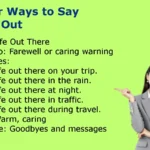
47. Stay Safe Out There
Scenario: Farewell or caring warning
Examples:
- Stay safe out there on your trip.
- Stay safe out there in the rain.
- Stay safe out there at night.
- Stay safe out there in traffic.
- Stay safe out there during travel.
Tone: Warm, caring
Best Use: Goodbyes and messages
Conclusion
“Look out” has many powerful alternatives that can fit different tones—from casual and friendly to serious and professional. Using these 47 expressions helps you communicate warnings more naturally, clearly, and appropriately in every situation.