Finding the right words can make all the difference in how your messages are received. Saying “Call me when you have time” is common, but there are many thoughtful alternatives that can make your communication feel warmer, more personal, and caring. Using these variations allows you to show attentiveness without sounding rushed or demanding, helping your message resonate more deeply with the recipient.
What Does “Call Me When You Have Time” Mean?
This phrase simply means you would like someone to contact you when they are free, without putting pressure on them. It expresses patience, care, and respect for the other person’s schedule.
When to Use “Call Me When You Have Time”
Use this phrase or its alternatives when:
- You want to connect without urgency
- Respecting someone’s busy schedule
- Asking for advice, guidance, or conversation
- Maintaining a friendly or professional tone
Is It Professional/Polite to Say “Call Me When You Have Time”?
Yes. It is both professional and polite, as long as the tone is friendly, patient, and considerate. It conveys respect for the other person’s time while keeping communication open.
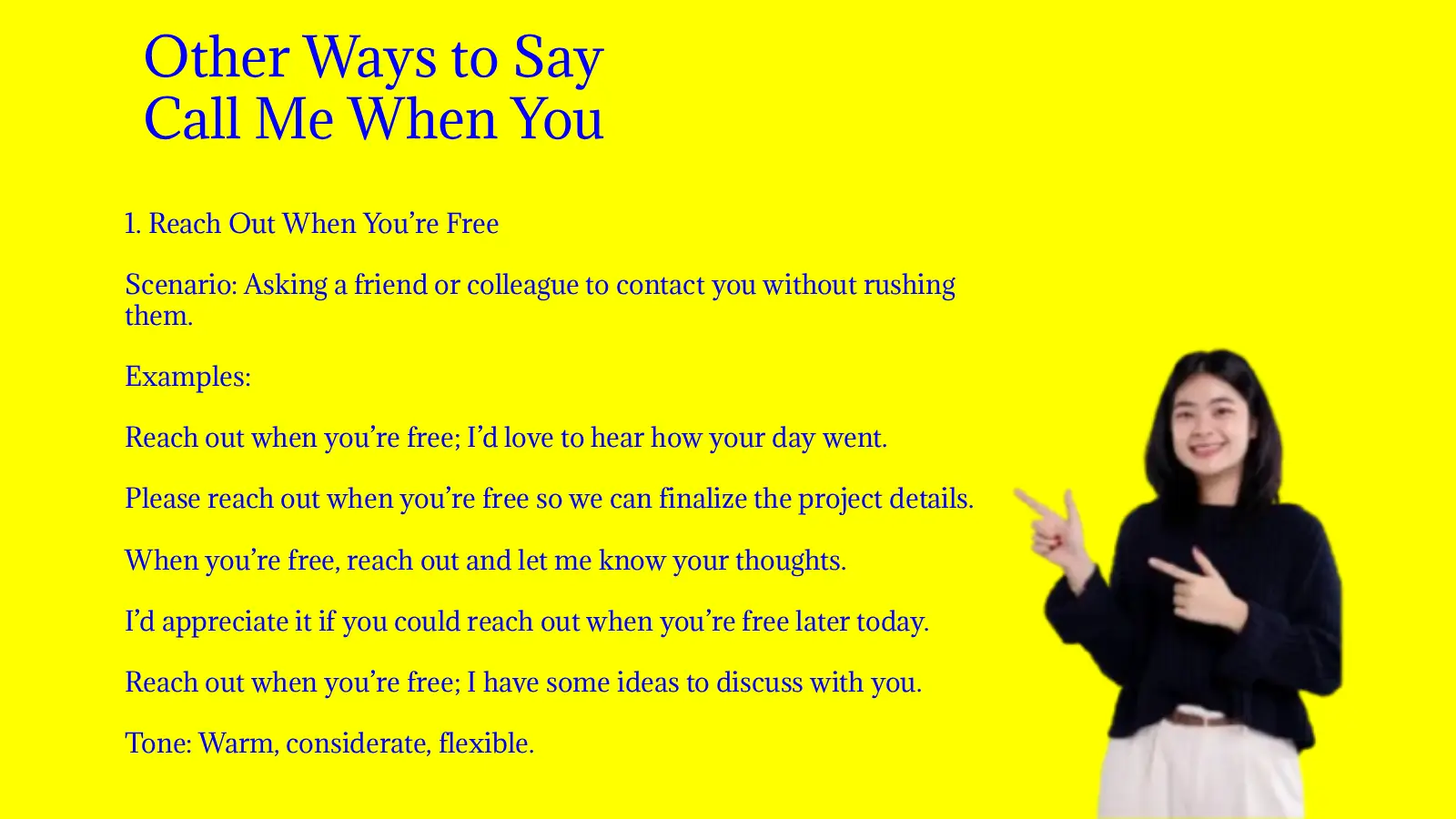
1. Reach Out When You’re Free
Scenario: Asking a friend or colleague to contact you without rushing them.
Examples:
- Reach out when you’re free; I’d love to hear how your day went.
- Please reach out when you’re free so we can finalize the project details.
- When you’re free, reach out and let me know your thoughts.
- I’d appreciate it if you could reach out when you’re free later today.
- Reach out when you’re free; I have some ideas to discuss with you.
Tone: Warm, considerate, flexible.
Why it works: Shows respect for the recipient’s schedule while expressing genuine interest and care.
2. Give Me a Ring When You Can
Scenario: Informal and friendly request for a call.
Examples:
- Give me a ring when you can; I have some exciting news to share.
- When you can, give me a ring and we’ll chat about tomorrow.
- Give me a ring when you can; I’d like your advice on something.
- Please give me a ring when you can; it won’t take long.
- Give me a ring when you can; I have a question about the report.
Tone: Casual, approachable, friendly.
Why it works: Communicates eagerness without pressure, making it easy for them to respond.
3. Call Me at Your Convenience
Scenario: Professional or polite request for a call.
Examples:
- Call me at your convenience to review the contract details together.
- Whenever convenient, call me so we can discuss your ideas further.
- Call me at your convenience; I’d like to clarify some points.
- Please call me at your convenience regarding the upcoming meeting.
- Call me at your convenience; I’m available most of the afternoon.
Tone: Professional, respectful, polite.
Why it works: Offers flexibility and shows professionalism while making the request clearly.
4. Ring Me When You’re Available
Scenario: Slightly informal, polite for friends or colleagues.
Examples:
- Ring me when you’re available; I need your opinion on this project.
- When you’re available, ring me to discuss our weekend plans.
- Ring me when you’re available; I want to share some ideas.
- Please ring me when you’re available; it won’t take long.
- Ring me when you’re available; I have a few questions for you.
Tone: Friendly, gentle, polite.
Why it works: Suggests interest and patience, making the recipient feel unpressured.
5. Touch Base When You Have a Moment
Scenario: Casual professional or friendly check-in.
Examples:
- Touch base when you have a moment about the marketing plan.
- Could you touch base when you have a moment to review this?
- Touch base when you have a moment; I’d like to hear your ideas.
- When you have a moment, touch base to discuss next steps.
- Touch base when you have a moment so we can finalize things.
Tone: Professional yet approachable.
Why it works: Polite, brief, and non-demanding; keeps communication open.
6. Drop Me a Line When You Can
Scenario: Friendly and casual request.
Examples:
- Drop me a line when you can; I’d love to catch up soon.
- When you can, drop me a line to share your thoughts.
- Drop me a line when you can; I need a quick update.
- Please drop me a line when you can; I want your feedback.
- Drop me a line when you can; I have something exciting to share.
Tone: Casual, personal, friendly.
Why it works: Shows warmth and patience while inviting communication without pressure.
7. Let’s Chat When You’re Free
Scenario: Friendly and conversational request.
Examples:
- Let’s chat when you’re free about the upcoming team event.
- When you’re free, let’s chat; I have some ideas to share.
- Let’s chat when you’re free and discuss your recent project.
- Please let’s chat when you’re free; I want your opinion.
- Let’s chat when you’re free; I have a question for you.
Tone: Approachable, conversational, caring.
Why it works: Suggests casual dialogue, making it easier for the recipient to respond.
8. Connect With Me When You Can
Scenario: Slightly professional, polite approach.
Examples:
- Connect with me when you can so we can go over the report.
- When you can, connect with me about your recent updates.
- Connect with me when you can; I’d like your guidance.
- Please connect with me when you can to discuss our strategy.
- Connect with me when you can; I need your input.
Tone: Professional, respectful, gentle.
Why it works: Communicates urgency lightly, making it polite and collaborative.
9. Ping Me When You’re Free
Scenario: Informal, casual, modern phrasing.
Examples:
- Ping me when you’re free; I want to share something exciting.
- When you’re free, ping me and let’s finalize the details.
- Ping me when you’re free; I have a quick question.
- Please ping me when you’re free; I’d love your advice.
- Ping me when you’re free; I need your feedback on this.
Tone: Casual, friendly, upbeat.
Why it works: Light-hearted and quick, suitable for informal digital communication.
10. Give Me a Shout When You Can
Scenario: Friendly, upbeat, informal.
Examples:
- Give me a shout when you can; I have some good news.
- When you can, give me a shout and we’ll discuss plans.
- Give me a shout when you can; I need a quick opinion.
- Please give me a shout when you can; I want to share updates.
- Give me a shout when you can; I’d like your advice.
Tone: Cheerful, casual, friendly.
Why it works: Conveys enthusiasm while being non-demanding, perfect for friends or colleagues.
11. Schedule a Call When You’re Ready
Scenario: Professional or semi-formal request to organize a conversation.
Examples:
- Schedule a call when you’re ready so we can review the project together.
- When you’re ready, schedule a call to discuss your progress updates.
- Schedule a call when you’re ready; I’d like your feedback on this report.
- Please schedule a call when you’re ready to finalize the plan.
- Schedule a call when you’re ready; I have some ideas to share.
Tone: Polite, structured, professional.
Why it works: Offers flexibility while showing respect for the recipient’s timing and readiness.
12. Let Me Know When You Can Talk
Scenario: Casual and polite request to start a conversation.
Examples:
- Let me know when you can talk; I want to go over the details.
- When you can talk, let me know so we can plan the next steps.
- Let me know when you can talk; I need some advice on this.
- Please let me know when you can talk; it won’t take long.
- Let me know when you can talk; I have a few questions to ask.
Tone: Friendly, caring, considerate.
Why it works: Polite and non-pressuring, allowing the recipient to choose their time.
13. Give Me a Buzz When You’re Free
Scenario: Informal and upbeat way to ask for a call.
Examples:
- Give me a buzz when you’re free; I have exciting news to share.
- When you’re free, give me a buzz so we can plan the trip.
- Give me a buzz when you’re free; I’d love your thoughts.
- Please give me a buzz when you’re free; it’s a quick question.
- Give me a buzz when you’re free; I need your input on this.
Tone: Casual, friendly, energetic.
Why it works: Shows enthusiasm and friendliness while keeping the request light.
14. Catch Me When You Can
Scenario: Informal, casual, and friendly.
Examples:
- Catch me when you can; I want to discuss the weekend plans.
- When you can, catch me to go over the report together.
- Catch me when you can; I have some updates to share.
- Please catch me when you can; I need your advice.
- Catch me when you can; it won’t take long.
Tone: Light, personal, relaxed.
Why it works: Creates a casual and approachable vibe without urgency.
15. Drop Me a Call When Available
Scenario: Semi-formal request, works for colleagues or friends.
Examples:
- Drop me a call when available; I’d like to finalize the presentation.
- When available, drop me a call to discuss your feedback.
- Drop me a call when available; I have a few questions for you.
- Please drop me a call when available; it’s regarding the meeting.
- Drop me a call when available; I want to share some ideas.
Tone: Polite, slightly formal, approachable.
Why it works: Suggests convenience while maintaining clarity and professionalism.
16. Reach Me When You’re Free
Scenario: General polite request, friendly or professional.
Examples:
- Reach me when you’re free; I have updates to share with you.
- When you’re free, reach me to discuss the client proposal.
- Reach me when you’re free; I’d like your input on this project.
- Please reach me when you’re free; it’s a quick matter.
- Reach me when you’re free; I want to clarify a few details.
Tone: Flexible, polite, approachable.
Why it works: Respectful of the recipient’s schedule while showing genuine interest.
17. Let’s Connect When You’re Free
Scenario: Professional yet friendly approach.
Examples:
- Let’s connect when you’re free to finalize the report together.
- When you’re free, let’s connect and discuss your recent findings.
- Let’s connect when you’re free; I have ideas to share.
- Please let’s connect when you’re free; it’s regarding next week’s project.
- Let’s connect when you’re free; I’d like to clarify some points.
Tone: Collaborative, polite, professional.
Why it works: Invites interaction while remaining considerate of timing.
18. Get in Touch When You Can
Scenario: Polite, casual, suitable for friends or colleagues.
Examples:
- Get in touch when you can; I need your opinion on something.
- When you can, get in touch to review the plan together.
- Get in touch when you can; I’d like your advice.
- Please get in touch when you can; I want to discuss options.
- Get in touch when you can; it’s regarding the upcoming event.
Tone: Friendly, polite, flexible.
Why it works: Encourages communication without pressure, adaptable for multiple contexts.
19. Hit Me Up When You Have a Moment
Scenario: Informal, friendly, modern phrasing.
Examples:
- Hit me up when you have a moment; I have news to share.
- When you have a moment, hit me up to plan the weekend.
- Hit me up when you have a moment; I need a quick favor.
- Please hit me up when you have a moment; I want your feedback.
- Hit me up when you have a moment; I’d like to chat.
Tone: Casual, friendly, relaxed.
Why it works: Light-hearted and approachable, perfect for informal contexts.
20. Give Me a Call When You Have a Moment
Scenario: Semi-formal and polite.
Examples:
- Give me a call when you have a moment to discuss the report.
- When you have a moment, give me a call; I need advice.
- Give me a call when you have a moment; it’s urgent but brief.
- Please give me a call when you have a moment to review details.
- Give me a call when you have a moment; I want to update you.
Tone: Professional, polite, clear.
Why it works: Politely indicates a call is needed while respecting their time.
21. Touch Base When You’re Available
Scenario: Professional or casual check-in without pressure.
Examples:
- Touch base when you’re available so we can review the latest updates.
- When you’re available, touch base to discuss your progress on the project.
- Touch base when you’re available; I’d like your input on a few matters.
- Please touch base when you’re available to finalize the meeting agenda.
- Touch base when you’re available; I have questions about the report.
Tone: Professional, polite, collaborative.
Why it works: Politely opens communication while allowing the recipient to decide timing.
22. Give Me a Quick Call When You Can
Scenario: Informal but clear, asking for a brief call.
Examples:
- Give me a quick call when you can; it won’t take long.
- When you can, give me a quick call to review our notes.
- Give me a quick call when you can; I have something important to ask.
- Please give me a quick call when you can; I need your input.
- Give me a quick call when you can; I’d like to clarify details.
Tone: Friendly, direct, polite.
Why it works: Indicates urgency subtly without being pushy; the call is brief and manageable.
23. Reach Out When It’s Convenient
Scenario: Polite, professional, and respectful request.
Examples:
- Reach out when it’s convenient for you to discuss the project timeline.
- When it’s convenient, reach out to review your recent updates.
- Reach out when it’s convenient; I’d like your guidance on the next steps.
- Please reach out when it’s convenient; I have a quick question.
- Reach out when it’s convenient; I’d like to finalize our strategy.
Tone: Respectful, considerate, professional.
Why it works: Emphasizes flexibility and courtesy, showing you respect the recipient’s schedule.
24. Give Me a Call at Your Leisure
Scenario: Polite, slightly formal, good for professional settings.
Examples:
- Give me a call at your leisure to go over the contract details.
- When convenient, give me a call at your leisure about your suggestions.
- Give me a call at your leisure; I want to clarify a few items.
- Please give me a call at your leisure to discuss the proposal.
- Give me a call at your leisure; I’d like your advice on this matter.
Tone: Polite, professional, patient.
Why it works: Shows utmost respect for the recipient’s time and availability.
25. Connect With Me at Your Convenience
Scenario: Professional or polite, suitable for colleagues or clients.
Examples:
- Connect with me at your convenience to review the quarterly report.
- When convenient, connect with me so we can finalize the plan.
- Connect with me at your convenience; I’d like your opinion on this.
- Please connect with me at your convenience to discuss the strategy.
- Connect with me at your convenience; I need your guidance on the matter.
Tone: Formal, respectful, professional.
Why it works: Clear, polite, and professional; keeps communication open without urgency.
26. Ring Me at Your Convenience
Scenario: Slightly informal professional request.
Examples:
- Ring me at your convenience to finalize the client presentation.
- When convenient, ring me to discuss your feedback on the report.
- Ring me at your convenience; I’d like to go over some ideas.
- Please ring me at your convenience to clarify a few details.
- Ring me at your convenience; I need your input on the project.
Tone: Polite, professional, approachable.
Why it works: Combines politeness and flexibility, allowing the recipient to respond comfortably.
27. Drop Me a Line When It’s Good for You
Scenario: Friendly, informal, and caring approach.
Examples:
- Drop me a line when it’s good for you; I want to share news.
- When it’s good for you, drop me a line to review updates.
- Drop me a line when it’s good for you; I’d like your advice.
- Please drop me a line when it’s good for you; it won’t take long.
- Drop me a line when it’s good for you; I have a few questions.
Tone: Casual, personal, friendly.
Why it works: Shows flexibility and warmth while inviting communication naturally.
28. Catch Up With Me When You Can
Scenario: Informal, friendly, personal approach.
Examples:
- Catch up with me when you can; I want to hear about your weekend.
- When you can, catch up with me to discuss your ideas.
- Catch up with me when you can; I have something to share.
- Please catch up with me when you can; I’d like your opinion.
- Catch up with me when you can; it won’t take long.
Tone: Warm, friendly, relaxed.
Why it works: Suggests casual conversation, making communication approachable and stress-free.
29. Give Me a Ring at Your Leisure
Scenario: Polite, friendly-professional hybrid phrasing.
Examples:
- Give me a ring at your leisure to finalize the proposal.
- When convenient, give me a ring at your leisure about updates.
- Give me a ring at your leisure; I’d like your advice.
- Please give me a ring at your leisure to review the report.
- Give me a ring at your leisure; I want to share ideas.
Tone: Polite, professional, considerate.
Why it works: Communicates patience and respect while keeping the invitation to call open.
30. Reach Me When It’s Convenient
Scenario: Polite, versatile for professional or personal use.
Examples:
- Reach me when it’s convenient to discuss your latest project updates.
- When it’s convenient, reach me to finalize the presentation together.
- Reach me when it’s convenient; I have a few questions for you.
- Please reach me when it’s convenient to review the meeting agenda.
- Reach me when it’s convenient; I’d like to share some insights.
Tone: Flexible, polite, professional.
Why it works: Offers freedom to the recipient while maintaining clarity and respect.
FAQs
1. Can I use these alternatives in professional emails?
Yes. Options like “Call me at your convenience” or “Connect with me when you can” are polite and professional.
2. Are some alternatives better for friends than colleagues?
Yes. Informal phrases like “Ping me when you’re free” or “Hit me up when you have a moment” are better for friends.
3. Will using these alternatives make me sound pushy?
No. All alternatives are phrased politely and give control to the recipient, showing patience and care.
4. Which phrases are best for urgent matters?
Use slightly more direct phrases like “Give me a quick call when you can” or “Call me at your convenience.”
5. Can these phrases be used in text messages or chat apps?
Absolutely. Casual alternatives like “Ping me” or “Drop me a line” are perfect for digital communication.
Conclusion
Using other ways to say ‘Call Me When You Have Time’ allows you to communicate politely, professionally, or casually, depending on the context. These alternatives make your message clear, considerate, and suitable for emails, texts, or calls. By choosing the right phrase, you ensure effective communication and build stronger connections.