In a Funk Meaning refers to feeling sad, discouraged, unmotivated, or emotionally low for a period of time. This common idiom describes a temporary emotional slump or lack of motivation and is often used in everyday conversations to explain someone’s mood or state of mind.
The confusion often comes from the fact that in a funk can describe a person’s mood without clearly explaining why they feel that way. Many people also search for in a funk definition, in a funk examples, how to use in a funk, and in a funk in a sentence to make sure they’re using the expression correctly. And here’s the kicker: using the phrase in the wrong context can make your message sound confusing or unnatural.
The good news? It’s much simpler than it seems.
In this guide, you’ll discover the true In a Funk Meaning, learn the definition of in a funk, understand when to use in a funk, and explore real in a funk examples in everyday conversations. You’ll also find the origin of the phrase in a funk, similar expressions, and tips to help you use this common idiom naturally and confidently.
By the end, you’ll know exactly what in a funk means, how to use it correctly, and why it’s one of the most common expressions for describing a temporary low mood.
What Does “In a Funk” Mean?
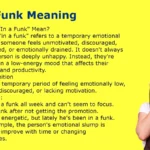
The phrase “in a funk” refers to a temporary emotional state where someone feels unmotivated, discouraged, mentally tired, or emotionally drained. It doesn’t always mean the person is deeply unhappy. Instead, they’re often stuck in a low-energy mood that affects their enthusiasm and productivity.
Simple Definition
In a funk: A temporary period of feeling emotionally low, uninspired, discouraged, or lacking motivation.
For example:
- I’ve been in a funk all week and can’t seem to focus.
- She’s in a funk after not getting the promotion.
- He’s usually energetic, but lately he’s been in a funk.
In each example, the person’s emotional slump is expected to improve with time or changing circumstances.
Literal vs. Figurative Meaning
Today, “in a funk” is almost always used figuratively.
It doesn’t describe a physical place or condition. Instead, it paints a picture of someone whose emotional energy has temporarily faded.
Compare these examples:
| Sentence | Meaning |
| I’ve been in a funk since Monday. | Feeling emotionally low or unmotivated. |
| After the breakup, she fell into a funk. | She entered a period of emotional discouragement. |
| The rainy weather has everyone in a funk. | Many people feel gloomy or less energetic. |
Because it’s figurative, the phrase works in many different situations—from work stress to personal disappointment.
What Emotions Does a Funk Describe?
Being in a funk can involve several emotions at the same time.
These often include:
- Low motivation
- Mental fatigue
- Frustration
- Mild sadness
- Disappointment
- Emotional exhaustion
- Boredom
- Lack of enthusiasm
- Feeling emotionally stuck
Not everyone experiences every symptom. One person may simply lose interest in hobbies, while another struggles to concentrate at work.
Why Context Matters
The phrase is flexible, so context determines its exact meaning.
For example:
- I’m in a funk after failing my exam.
- The emotion is disappointment.
- I’ve been in a funk since winter started.
- The emotion may relate to seasonal mood changes.
- The whole office is in a funk after the layoffs.
- The mood reflects shared discouragement.
Understanding the surrounding situation helps you interpret the phrase accurately.
What Does It Mean to Be “In a Funk”?
Being in a funk goes beyond having a bad hour or an off morning. Instead, it’s a short-term emotional slump that affects how you think, feel, and respond to everyday life.
Many people describe it as feeling like they’re moving through thick mud. They’re still functioning, but everything requires more effort than usual.
Common Characteristics
Someone who’s in a funk may experience:
- Difficulty starting tasks
- Reduced motivation
- Lower productivity
- Feeling emotionally flat
- Trouble concentrating
- Less excitement about favorite hobbies
- Social withdrawal
- Irritability
- Low mental energy
These feelings often improve after rest, positive experiences, or resolving whatever caused the slump.
Temporary Mood vs. Mental Health Condition
One important distinction is that a funk is usually temporary.
Here’s a helpful comparison.
| Temporary Funk | Clinical Depression |
| Usually lasts days or weeks | Can last months or longer |
| Often linked to a specific cause | May occur without a clear trigger |
| Motivation usually returns | Symptoms often persist |
| Mood can improve with enjoyable activities | Enjoyable activities may provide little relief |
| Doesn’t always interfere with daily functioning | Often significantly affects work, school, and relationships |
A temporary funk isn’t the same as a medical diagnosis. However, if low mood becomes severe or long-lasting, it’s important to seek guidance from a qualified healthcare professional.
Everyday Situations That Can Leave Someone in a Funk
Many ordinary events can trigger this emotional slump.
Examples include:
- Missing an important opportunity
- Finishing a major project
- Returning from vacation
- Burnout from work
- Relationship conflicts
- Financial stress
- Lack of sleep
- Continuous bad weather
- Academic pressure
- Losing motivation toward personal goals
Sometimes, no obvious reason exists. Emotional energy naturally rises and falls over time.
“Even the brightest days can follow cloudy mornings.”
This simple idea explains why emotional ups and downs are a normal part of life.
How to Use “In a Funk” in a Sentence
Because “in a funk” is an idiom, native English speakers use it naturally in everyday conversations.
It’s considered informal but widely accepted.
Everyday Conversation
Examples include:
- I’ve been in a funk lately.
- She’s trying to get out of her funk.
- He seems to be in a funk after the interview.
- Don’t worry—you won’t stay in a funk forever.
- Everyone has been in a funk at some point.
Workplace Examples
The phrase also appears in professional conversations, although people often use it casually.
Examples:
- Our team’s been in a funk since we lost that client.
- I’ve been in a creative funk all week.
- He’s in a productivity funk after working overtime for months.
- The department is trying to break out of its recent funk.
Notice that people often pair funk with words like creative, productivity, or mental to describe a specific challenge.
School and College Examples
Students frequently use this expression.
Examples:
- I’ve been in a study funk all semester.
- She fell into a funk after failing her chemistry exam.
- He’s in a writing funk and can’t finish his essay.
- The stress of finals put everyone in a funk.
Family and Relationship Examples
Relationships naturally involve emotional ups and downs.
Examples:
- Dad’s been in a funk since retirement.
- She entered a funk after moving away from home.
- We’re all in a funk because our dog is sick.
- He was in a funk after the breakup but is feeling much better now.
Social Media Examples
You’ll often see people write things like:
- Currently in a funk.
- Trying to get out of this Monday funk.
- Anyone else in a weird funk today?
- Workout finally pulled me out of my funk.
These posts usually describe temporary emotional states rather than serious mental health concerns.
Examples of “In a Funk” in Real-Life Situations
Understanding real-life examples makes this idiom much easier to remember.
After a Stressful Week
Imagine working overtime every day while juggling family responsibilities.
By Friday, you might say:
“I’m completely in a funk. I need a weekend to recharge.”
You’re exhausted mentally rather than physically ill.
Following Disappointment
Sarah interviews for a job she really wants.
Despite preparing for weeks, another candidate gets the position.
She tells her friend:
“I’ve been in a funk ever since I got the rejection email.”
Her disappointment affects her motivation for several days.
During Creative Burnout
Writers, artists, musicians, and designers often experience creative slumps.
A novelist might say:
“I’m in a creative funk. Every sentence feels forced.”
The problem isn’t a lack of skill. It’s a temporary loss of inspiration.
After Failing an Exam
College students commonly experience emotional slumps after poor grades.
For example:
“I stayed in a funk for days after failing my statistics exam.”
The disappointment makes studying harder until confidence returns.
Following a Breakup
Even healthy emotional recovery takes time.
Someone might say:
“He’s been in a funk since the relationship ended.”
Friends understand that the person simply needs time and support.
Losing Motivation at Work
A software developer finishes a demanding six-month project.
Instead of feeling excited afterward, they struggle to focus on new assignments.
This is often called a post-project funk.
Seasonal Mood Changes
Cold weather, shorter daylight hours, and staying indoors can leave people feeling emotionally sluggish.
Someone may say:
“Winter always puts me in a funk.”
The phrase describes reduced enthusiasm rather than a permanent emotional state.
Recovering From an Illness
Even after physical recovery, energy sometimes returns slowly.
Example:
“I’ve been in a funk ever since I had the flu.”
Low motivation and fatigue often fade as overall health improves.
Is Being “In a Funk” Always About Feeling Sad?
Not at all.
One of the biggest misconceptions about the in a funk meaning is that it always refers to sadness. In reality, a funk can involve several emotional states, many of which have little to do with feeling unhappy.
For some people, it’s a lack of energy. For others, it’s mental exhaustion, boredom, or a feeling of being emotionally disconnected. You might still laugh with friends, go to work, or complete your daily responsibilities while feeling like something is “off.”
That’s why the phrase is so useful. It describes an emotional gray area that falls somewhere between feeling great and feeling deeply distressed.
Feeling Unmotivated
Many people in a funk don’t feel sad at all. Instead, they simply can’t find the drive to begin or finish tasks.
You may notice yourself:
- Procrastinating more than usual
- Avoiding responsibilities
- Putting hobbies on hold
- Feeling mentally sluggish
The desire to do something exists, but the energy doesn’t.
Feeling Emotionally Flat
Sometimes, a funk feels less like sadness and more like emotional numbness.
You aren’t overwhelmed by negative emotions. You just don’t feel excited, inspired, or engaged.
Daily routines continue, but they lack the spark they once had.
Feeling Mentally Drained
Long periods of stress can leave your brain feeling overloaded.
Instead of sadness, you experience:
- Poor concentration
- Decision fatigue
- Forgetfulness
- Difficulty solving simple problems
Many people mistake this mental fatigue for laziness when it’s actually emotional exhaustion.
Feeling Disconnected
Another common experience is emotional distance.
You may find yourself:
- Losing interest in conversations
- Skipping social gatherings
- Ignoring favorite hobbies
- Feeling detached from goals
This sense of disconnection often improves once stress levels decrease or daily routines become more balanced.
Feeling Bored or Uninspired
Not every funk stems from emotional pain.
Sometimes life simply becomes repetitive.
For example:
- Doing the same work every day
- Following an identical routine for months
- Lacking new challenges
- Feeling creatively stuck
In these cases, the solution may involve changing your environment, learning a new skill, or taking a meaningful break rather than addressing sadness itself.
Origin of the Phrase “In a Funk”
The expression “in a funk” has a surprisingly long history. Although today it usually describes a temporary emotional slump, the word “funk” has carried several meanings over the centuries before settling into its modern sense.
Early Meaning of “Funk”
The word “funk” entered English several hundred years ago. In the 17th century, it commonly referred to a state of fear or panic. Someone “in a funk” wasn’t simply unmotivated—they were frightened or alarmed.
Over time, everyday speech softened that meaning. Instead of describing fear alone, funk gradually came to represent a broader emotional slump that included discouragement, low spirits, and lack of enthusiasm.
Language evolves naturally, and this shift reflects how people began using the word in conversation rather than in formal writing.
How the Meaning Changed
As English developed, funk expanded beyond fear to describe a lingering low mood.
By the 19th and 20th centuries, native speakers increasingly used expressions such as:
- He’s in a funk.
- She’s been in a funk lately.
- The whole team is in a funk.
Rather than signaling panic, these examples described emotional stagnation, disappointment, or reduced motivation.
Today, this modern meaning is far more common than the original historical sense.
Why the Phrase Is Still Popular
The expression has remained popular because it captures a feeling many people struggle to describe.
Not every emotional slump qualifies as sadness. Not every period of low motivation is burnout. And not every difficult week points to a serious mental health condition.
“In a funk” fills that gap perfectly. It’s short, relatable, and instantly understood by most English speakers.
Whether someone feels emotionally drained after a demanding project, uninspired during winter, or discouraged after a setback, saying they’re “in a funk” communicates that temporary state with remarkable clarity.
Why Do People Get Into a Funk?
Everyone experiences emotional ups and downs. One week, you feel energized and focused. The next, even simple tasks seem like a chore. That’s the nature of being human.
A funk rarely appears out of nowhere. Most of the time, it’s the result of several small factors building over days or weeks. Understanding those triggers can help you recover faster and prevent future slumps.
Let’s explore the most common reasons people find themselves in a funk.
Emotional Causes
Emotions don’t exist in isolation. A single disappointment can ripple into many areas of life.
Common emotional triggers include:
- Grief after losing a loved one
- Disappointment from unmet expectations
- Feeling rejected
- Loneliness
- Anxiety about the future
- Low self-confidence
- Ongoing worry
For example, imagine applying for your dream job. You prepare for weeks, perform well in the interview, and still receive a rejection email. Even if you quickly begin applying elsewhere, your motivation may dip for a while.
That’s a classic emotional funk.
Physical Causes
Your body and mind constantly influence one another.
Poor physical health often leads to emotional fatigue.
Some common physical contributors include:
- Lack of quality sleep
- Illness
- Chronic pain
- Poor nutrition
- Dehydration
- Hormonal changes
- Physical exhaustion
A few nights of interrupted sleep can make you feel irritable, unfocused, and emotionally drained. In many cases, improving your physical well-being naturally lifts your mood.
Lifestyle-Related Causes
Daily habits shape emotional resilience more than many people realize.
Small routines can either protect your mental energy or slowly drain it.
Examples include:
- Spending too much time indoors
- Excessive screen time
- Lack of exercise
- Poor work-life balance
- Social isolation
- Constant multitasking
If every day feels identical, your brain receives fewer stimulating experiences. That monotony can gradually lead to boredom and emotional stagnation.
Work and Academic Stress
Pressure doesn’t always create motivation.
Sometimes it creates the opposite.
Heavy workloads, unrealistic deadlines, difficult coworkers, and academic demands can leave people mentally depleted.
Common signs include:
- Declining productivity
- Procrastination
- Irritability
- Feeling overwhelmed
- Difficulty concentrating
Students often experience this after final exams, while professionals may notice it after completing an intense project.
Relationship Challenges
Relationships affect emotional health more than almost anything else.
Arguments, misunderstandings, distance, or unresolved conflicts can quietly drain your emotional reserves.
Examples include:
- Breakups
- Family disagreements
- Friendship conflicts
- Divorce
- Parenting stress
- Caregiving responsibilities
Even positive life changes, such as getting married or welcoming a new baby, require emotional adjustment.
Major Life Changes
Big transitions often create uncertainty.
Even exciting milestones can leave someone feeling emotionally unsettled.
Examples include:
- Moving to another city
- Starting college
- Changing careers
- Retirement
- Becoming a parent
- Buying a home
- Graduating
During periods of change, it’s normal to feel temporarily “off” while adjusting to a new routine.
Lack of Sleep and Burnout
Burnout doesn’t happen overnight.
It develops gradually after prolonged stress without adequate recovery.
Typical warning signs include:
- Constant fatigue
- Reduced motivation
- Emotional numbness
- Cynicism
- Lower productivity
- Difficulty making decisions
People often describe burnout as “being stuck in a funk,” although burnout usually lasts longer and requires more intentional recovery.
Signs You Might Be in a Funk
Recognizing a funk early makes it easier to address before it grows into a longer emotional slump.
Here are some of the most common signs.
Low Motivation
Tasks you normally complete without hesitation suddenly feel difficult.
You know what needs to be done. You simply don’t feel like doing it.
Reduced Productivity
You stay busy but accomplish very little.
Simple assignments take longer than usual because your focus keeps drifting.
Difficulty Concentrating
Mental clarity often fades during a funk.
You might:
- Forget appointments
- Lose your train of thought
- Reread the same paragraph repeatedly
- Struggle to make decisions
Loss of Enthusiasm
Activities that once brought excitement now feel ordinary.
Examples include:
- Reading
- Gaming
- Traveling
- Exercising
- Cooking
- Watching favorite shows
You don’t necessarily dislike them—you just don’t feel excited about them.
Irritability
Little inconveniences suddenly feel much bigger.
Minor frustrations may trigger stronger reactions because your emotional reserves are already running low.
Feeling Emotionally Stuck
Many people describe a funk as feeling trapped between wanting to move forward and lacking the energy to do so.
It’s similar to driving with the parking brake still engaged.
The car moves, but everything feels harder.
Avoiding Social Activities
You may decline invitations, cancel plans, or spend more time alone.
Occasional solitude is healthy.
However, withdrawing from meaningful relationships for extended periods may signal that your emotional energy is running low.
Lack of Energy
This isn’t always physical tiredness.
Instead, it’s a noticeable decline in emotional energy.
Even enjoyable activities may feel like they require extra effort.
How to Get Out of a Funk
The good news?
Most funks don’t last forever.
Although there’s no instant cure, small intentional actions often make a noticeable difference.
Think of recovery as turning a large ship. It rarely changes direction instantly, but consistent adjustments gradually move it toward calmer waters.
Identify What’s Causing It
Start with curiosity instead of criticism.
Ask yourself:
- When did this begin?
- What’s changed recently?
- Am I stressed?
- Am I sleeping enough?
- Have I stopped doing things I enjoy?
Understanding the cause makes it easier to choose an effective solution.
Change Your Routine
A repetitive schedule often fuels emotional stagnation.
Try introducing something different.
Examples include:
- Taking a different route to work
- Visiting a new coffee shop
- Rearranging your workspace
- Learning a hobby
- Reading a different genre
Small changes create mental novelty.
Set Small, Achievable Goals
Large goals can feel overwhelming during a funk.
Instead of focusing on everything, focus on one small win.
Examples:
- Clean one room.
- Write one page.
- Walk for fifteen minutes.
- Answer three emails.
Momentum builds confidence.
Confidence builds motivation.
Get Regular Exercise
Physical movement benefits both body and mind.
Research consistently shows that regular exercise supports mood, reduces stress, and improves energy levels.
You don’t need an intense workout.
Simple options include:
- Walking
- Cycling
- Swimming
- Yoga
- Stretching
- Dancing
The goal is consistency rather than perfection.
Spend Time Outdoors
Nature has a calming effect on many people.
Fresh air, sunlight, and green spaces can help reduce mental fatigue while improving focus and emotional well-being.
Even a twenty-minute walk outside can refresh your perspective.
Connect With Supportive People
Isolation often deepens emotional slumps.
Talking with trusted friends or family members reminds you that you aren’t facing challenges alone.
Sometimes, a single conversation changes an entire day.
Prioritize Sleep
Sleep restores emotional resilience.
Helpful habits include:
- Going to bed at consistent times
- Limiting caffeine late in the day
- Reducing screen exposure before bed
- Keeping the bedroom cool and quiet
Quality sleep often improves concentration and mood within a few days.
Practice Mindfulness or Journaling
Writing thoughts on paper helps organize emotions.
Mindfulness encourages you to observe feelings without immediately judging them.
Neither practice removes problems overnight.
However, both can reduce mental clutter and improve emotional awareness.
Take Breaks From Social Media
Constant comparison can quietly undermine motivation.
People typically post life’s highlights, not everyday struggles.
Stepping away from endless scrolling gives your brain room to reset.
Know When to Seek Professional Help
Most funks improve with time and healthy habits.
However, if symptoms become severe, last for weeks, or begin interfering with daily life, consider speaking with a qualified mental health professional.
Seeking support is a sign of self-awareness, not weakness.
“In a Funk” vs. Similar Expressions
Many English expressions describe low moods, but they aren’t interchangeable.
Here’s how they compare.
| Expression | Meaning | Primary Difference |
| In a funk | Temporary emotional slump | General lack of motivation or low mood |
| In a rut | Stuck in repetitive routines | Focuses more on circumstances than emotions |
| Feeling blue | Mild sadness | Primarily emotional sadness |
| Down in the dumps | Noticeably unhappy | Stronger disappointment or discouragement |
| Burned out | Exhausted after prolonged stress | Long-term mental and physical fatigue |
| Having an off day | Brief period of poor performance | Usually lasts only a day |
| At a low ebb | Feeling emotionally or mentally depleted | Often follows setbacks or prolonged stress |
Understanding these subtle differences helps you choose the most accurate expression for each situation.
Synonyms of “In a Funk”
Depending on the context, you can replace “in a funk” with similar expressions.
| Synonym | Best Used When |
| Feeling down | Mild sadness |
| Feeling low | General emotional slump |
| Feeling blue | Temporary sadness |
| Out of sorts | Feeling mentally or physically off |
| In low spirits | Reduced enthusiasm |
| Demotivated | Lack of drive |
| Emotionally drained | Mental exhaustion |
| Listless | Low energy |
| Uninspired | Creative or motivational slump |
| Disheartened | Discouraged after disappointment |
| Glum | Noticeably gloomy |
| Sluggish | Low mental or physical energy |
Antonyms of “In a Funk”
These words express the opposite emotional state.
- Motivated
- Inspired
- Optimistic
- Cheerful
- Upbeat
- Energetic
- Enthusiastic
- Confident
- Positive
- Focused
- Hopeful
- Rejuvenated
Common Idioms Related to “In a Funk”
English offers plenty of colorful idioms that describe similar emotions.
| Idiom | Meaning |
| Feeling blue | Mild sadness |
| Down in the dumps | Feeling very unhappy |
| Out of sorts | Feeling physically or emotionally off |
| At a low ebb | Experiencing low energy or confidence |
| Under the weather | Feeling slightly ill or run-down |
| Hit a rough patch | Going through temporary difficulties |
| Lose your spark | Losing enthusiasm or excitement |
| Running on empty | Feeling mentally or physically exhausted |
| Stuck in a rut | Trapped in repetitive routines |
Each expression carries a slightly different nuance, making English particularly rich when describing emotional experiences.
Common Mistakes When Using “In a Funk”
Even native speakers occasionally misuse this expression.
Here are the most common mistakes to avoid.
Confusing a Funk With Depression
A funk usually describes a temporary emotional slump.
Depression is a medical condition that involves persistent symptoms and should not be used interchangeably with casual idioms.
Assuming It Always Means Sadness
Someone can feel:
- Unmotivated
- Mentally exhausted
- Creatively blocked
- Emotionally flat
…without necessarily feeling sad.
Using It for Long-Term Conditions
If someone has struggled with severe emotional difficulties for months, saying they’re “in a funk” may minimize what they’re experiencing.
The idiom works best for temporary situations.
Confusing It With the Music Genre
Funk also refers to a style of music known for rhythmic bass lines and energetic grooves.
The two meanings are completely unrelated.
Context makes the difference clear.
For example:
- I’m listening to funk music.
- I’m in a funk today.
Although the same word appears, the meanings couldn’t be more different.
Is “In a Funk” Formal or Informal?
The phrase “in a funk” is generally considered informal English.
It’s perfectly appropriate in everyday conversation and widely understood across the United States, Canada, and many other English-speaking regions.
Appropriate Situations
You can comfortably use it when speaking with:
- Friends
- Family
- Coworkers
- Classmates
- Online communities
- Casual interviews
- Podcasts
- Blogs
- Social media
Less Appropriate Situations
In formal reports, academic papers, or legal documents, more precise alternatives usually work better.
Instead of writing:
The employee was in a funk.
A formal report might say:
The employee appeared temporarily disengaged and less motivated than usual.
Choosing the right level of formality helps your communication sound both natural and professional.
Frequently Asked Questions About In a Funk Meaning
What does “in a funk” mean?
“In a funk” means experiencing a temporary period of low mood, reduced motivation, emotional fatigue, or lack of enthusiasm. Someone in a funk may feel mentally drained, uninspired, or emotionally stuck, but the feeling usually improves over time.
For example:
I’ve been in a funk since finishing my big project. I just can’t seem to get motivated.
Is being in a funk the same as being depressed?
No. Although the two can share some symptoms, they aren’t the same.
A funk is generally:
- Temporary
- Triggered by a situation or period of stress
- Mild to moderate in intensity
- Likely to improve with rest, routine changes, or positive experiences
Depression, on the other hand, is a medical condition that can involve persistent sadness, loss of interest, changes in sleep or appetite, and difficulty functioning over an extended period. If low mood lasts for weeks or significantly affects daily life, it’s important to consult a qualified healthcare professional.
How long does a funk usually last?
There’s no fixed timeline.
For many people, a funk lasts:
| Duration | What It May Indicate |
| A few hours | Temporary disappointment or fatigue |
| A few days | Stress, burnout, or emotional overload |
| One to two weeks | Recovery from a major event or transition |
| Several weeks or longer | May require closer attention, especially if symptoms persist |
Recovery depends on the underlying cause, personal coping strategies, and overall well-being.
What causes someone to be in a funk?
A funk can develop for many reasons, including:
- Work-related stress
- Academic pressure
- Burnout
- Relationship difficulties
- Financial concerns
- Poor sleep
- Illness
- Creative blocks
- Seasonal changes
- Major life transitions
- Emotional disappointment
Sometimes, several small stressors combine to create one prolonged emotional slump.
Can you say, “I’m in a funk”?
Yes.
This is the most common way native English speakers use the idiom.
Examples include:
- I’m in a funk today.
- I’ve been in a funk all week.
- I think I’m finally getting out of this funk.
- Sorry I’ve been quiet. I’ve just been in a funk lately.
These sentences sound natural in everyday conversation.
Is “in a funk” an idiom?
Yes.
It’s an English idiom, meaning its figurative definition differs from the literal meanings of the individual words.
When someone says they’re in a funk, they don’t mean they’re physically inside something called a “funk.” Instead, they’re describing a temporary emotional state.
What is another word for “in a funk”?
Several expressions communicate a similar idea.
Common alternatives include:
- Feeling down
- Feeling low
- Feeling blue
- Out of sorts
- In low spirits
- Demotivated
- Emotionally drained
- Uninspired
- Downhearted
- Listless
- Sluggish
- Glum
The best synonym depends on the situation.
For instance, “feeling blue” emphasizes sadness, while “uninspired” better describes a creative slump.
How do you get out of a funk?
There’s no universal solution, but many people benefit from small, consistent changes.
Helpful strategies include:
- Identifying the source of the slump
- Getting enough sleep
- Exercising regularly
- Spending time outdoors
- Talking with trusted friends or family
- Setting realistic daily goals
- Taking breaks from social media
- Trying something new
- Practicing mindfulness or journaling
- Maintaining a balanced routine
The key is to focus on gradual progress rather than expecting an instant transformation.
Can someone be in a funk without being sad?
Absolutely.
Many people describe being in a funk as feeling:
- Mentally exhausted
- Emotionally flat
- Unmotivated
- Bored
- Creatively blocked
- Distracted
- Stuck
In these cases, sadness may not be the primary emotion.
Is “in a funk” commonly used in American English?
Yes.
The expression is widely used throughout the United States in both spoken and written English. You’ll hear it in:
- Everyday conversations
- Television shows
- Movies
- Podcasts
- Blogs
- News interviews
- Social media
- Workplace discussions
Because it’s familiar and relatable, it’s one of the most common idioms for describing a temporary emotional slump.
Quick Summary: Understanding the Meaning of “In a Funk”
The table below highlights the most important points covered in this guide.
| Topic | Key Takeaway |
| Meaning | A temporary period of low motivation, emotional fatigue, or discouragement |
| Part of Speech | Idiomatic expression |
| Tone | Informal but widely accepted |
| Common Uses | Everyday conversations, workplaces, schools, social media |
| Typical Causes | Stress, burnout, disappointment, lack of sleep, life changes, creative blocks |
| Duration | Usually short-term |
| Opposite Feelings | Motivated, energized, optimistic, inspired |
| Related Expressions | Feeling blue, in a rut, out of sorts, down in the dumps |
| Best Used When | Describing a temporary emotional slump rather than a medical condition |
Real-Life Case Studies
Understanding how people experience a funk in everyday situations makes the expression easier to recognize and use.
Case Study 1: The Burned-Out Employee
Situation:
Michael spent three months leading a demanding product launch. Once the project ended, he expected to feel relieved. Instead, he struggled to concentrate, lost interest in work, and felt unusually tired.
What happened?
He wasn’t lazy or incapable. He had entered a temporary post-project funk caused by prolonged stress and mental exhaustion.
What helped?
- Taking several days off
- Returning to regular exercise
- Reducing overtime
- Spending more time with family
Within a couple of weeks, his motivation gradually returned.
Case Study 2: The College Student
Situation:
Emma studied intensely for final exams. Although she earned excellent grades, she felt emotionally drained afterward.
She stopped reading for fun, ignored messages from friends, and spent most evenings watching television.
What happened?
Months of continuous academic pressure left her in a temporary emotional slump.
What helped?
- Catching up on sleep
- Visiting friends
- Starting a new hobby
- Giving herself permission to rest
Her enthusiasm slowly returned before the next semester.
Case Study 3: The Creative Professional
Situation:
A freelance graphic designer suddenly found every project difficult to start.
Ideas that once came naturally now required hours of effort.
What happened?
Instead of forcing creativity, the designer recognized the signs of a creative funk.
What helped?
- Taking short walks between projects
- Exploring museums and photography
- Reading outside the design field
- Working on personal creative projects
New experiences restored inspiration over time.
Quote to Remember
“A funk isn’t a destination. It’s a temporary stop along the road.”
This quote captures the heart of the expression. Emotional slumps happen to nearly everyone, but they don’t last forever.
Key Takeaways
If you remember only a few things about the in a funk meaning, make them these:
- “In a funk” describes a temporary emotional slump, not a permanent state.
- The phrase often refers to low motivation, mental fatigue, discouragement, or emotional flatness.
- People can be in a funk without feeling deeply sad.
- Common triggers include stress, burnout, disappointment, relationship challenges, illness, poor sleep, and major life changes.
- Small, intentional changes—such as improving sleep, exercising, changing routines, and connecting with supportive people—can help many people regain their energy.
- The expression is informal, widely understood, and frequently used in American English.
- Similar idioms include feeling blue, out of sorts, in a rut, and down in the dumps, though each has a slightly different meaning.
By understanding when and how to use this idiom, you’ll sound more natural in everyday English while recognizing an experience that almost everyone encounters at some point. Feeling in a funk doesn’t define you—it simply describes a temporary chapter that can pass with time, self-care, and renewed perspective.