Have you ever seen Grately vs. Greatly in a sentence and wondered which one is actually correct? You’re not alone. These two words look similar at first glance, but one is a common spelling mistake, while the other is a proper English adverb used in everyday writing.
That’s where the confusion begins. Many writers, students, and professionals accidentally type “grately” when they mean “greatly,” especially in emails, essays, business communication, and social media posts. And here’s the kicker: a small spelling error can make otherwise polished writing appear less credible.
But don’t worry—this mistake is easy to fix once you understand the difference.
In this guide, you’ll learn the correct usage of Grately vs. Greatly, their meanings, common examples, and simple tips to avoid this frequent grammar error. You’ll also discover how word choice, spelling accuracy, and proper written communication can improve the clarity and professionalism of your writing.
So, whether you’re proofreading an important document or simply trying to strengthen your English vocabulary, this article will help you use the right word with confidence every time.
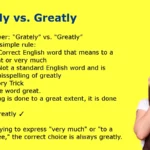
Quick Answer: “Grately” vs. “Greatly”
Here’s the simple rule:
Greatly = Correct English word that means to a large extent or very much
Grately = Not a standard English word and is usually a misspelling of greatly
Easy Memory Trick
Think of the word great.
If something is done to a great extent, it is done greatly.
Great → Greatly ✓
Grately ✗
If you’re trying to express “very much” or “to a large degree,” the correct choice is always greatly.
What Does “Greatly” Mean?
The word greatly is an adverb.
It describes how much something happens or how significant something is.
Common Meanings
- To a large extent
- Very much
- Considerably
- Significantly
Examples
- Your support is greatly appreciated.
- The new policy has greatly improved productivity.
- She was greatly surprised by the announcement.
- The company benefited greatly from the partnership.
Key Insight
Whenever you want to say “very much” or “significantly,” greatly is usually the right word.
What Does “Grately” Mean?
Here’s the important part:
Grately is not recognized as a standard English word.
In almost every situation, it appears because someone accidentally misspelled greatly.
Examples of Incorrect Usage
I am grately thankful.
Your help was grately appreciated.
We were grately affected by the change.
Correct Versions
I am greatly thankful.
Your help was greatly appreciated.
We were greatly affected by the change.
Key Takeaway
If you see grately, it is almost certainly a spelling error.
Why Do People Confuse “Grately” and “Greatly”?
The confusion happens for a few simple reasons.
Similar Spelling
Both words contain:
- G
- R
- A
- T
- E
Only a few letters are arranged differently.
Fast Typing
When typing quickly, people sometimes omit the second “a” in greatly.
Pronunciation Habits
Some speakers pronounce words quickly, making greatly sound like grately.
Autocorrect Issues
Certain devices may not immediately flag the mistake, allowing it to slip into writing.
The Grammar Behind “Greatly”
Understanding the grammar makes the difference obvious.
Great = Adjective
Examples:
- It was a great achievement.
- She is a great leader.
Greatly = Adverb
Examples:
- We greatly admire her.
- The weather has greatly improved.
Simple Formula
Adjective → Add “-ly” → Adverb
Great → Greatly
This follows a common English pattern:
- Quick → Quickly
- Slow → Slowly
- Careful → Carefully
- Great → Greatly
Because of this pattern, greatly is grammatically correct.
Common Phrases Using “Greatly”
You will frequently see greatly in everyday English.
Popular Expressions
- Greatly appreciated
- Greatly reduced
- Greatly improved
- Greatly affected
- Greatly admired
- Greatly respected
- Greatly valued
- Greatly increased
Example Sentences
- Your feedback is greatly appreciated.
- Costs have been greatly reduced.
- Technology has greatly improved communication.
- We were greatly inspired by her speech.
Side-by-Side Comparison Table
WordCorrect?MeaningUsageGreatly✓ YesTo a large extent; very muchStandard EnglishGrately✗ NoUsually a spelling mistakeAvoid using
Quick Rule
If you’re writing formally or informally, choose greatly.
Avoid grately entirely.
Real-Life Examples of “Greatly”
Let’s see how native speakers use it.
In Business Emails
“Your assistance is greatly appreciated.”
In Academic Writing
“The results were greatly influenced by environmental factors.”
In Everyday Conversation
“I greatly enjoyed the movie.”
In Professional Reports
“The new system greatly increased efficiency.”
Key Observation
You’ll find greatly in professional, academic, and casual English.
Examples of Common Mistakes
Here are mistakes people frequently make.
Incorrect
❌ Thank you grately.
Correct
✅ Thank you greatly.
Incorrect
❌ We were grately affected.
Correct
✅ We were greatly affected.
Incorrect
❌ Your support is grately appreciated.
Correct
✅ Your support is greatly appreciated.
How to Remember the Difference
Need a simple memory trick?
Think of the Root Word
The word comes from:
Great + ly = Greatly
Since great contains the letters “ea,” the adverb keeps them.
Visual Trick
Imagine the sentence:
“Your help was greatly appreciated.”
Notice the word great hidden inside greatly.
You cannot find the complete word great inside grately.
Why It Works
If you remember the root word great, you’ll never misspell greatly again.
What Spell Checkers Say
Most modern spell checkers recognize:
✅ Greatly
But flag:
❌ Grately
This is another clue that grately is not considered standard English.
Professional Writing Tip
Always review documents for this mistake, especially:
- Cover letters
- Business emails
- Academic papers
- Website content
A small spelling error can affect credibility.
When Should You Use “Greatly”?
Use greatly whenever you mean:
- Very much
- Significantly
- To a large degree
- Considerably
Examples
- We greatly appreciate your patience.
- The project greatly benefited from expert advice.
- She was greatly relieved.
- Tourism greatly contributes to the local economy.
Simple Test
Replace the word with “very much.”
If the sentence still makes sense, greatly is likely correct.
FAQ: “Grately” vs. “Greatly”
Is “grately” a real word?
No. It is not recognized as a standard English word and is generally considered a misspelling of greatly.
Which word should I use?
Use greatly in all standard English writing.
Why do people write “grately”?
Usually because of typing mistakes, spelling confusion, or pronunciation habits.
Is “greatly appreciated” correct?
Yes. “Greatly appreciated” is a common and correct English phrase.
Can I ever use “grately”?
In standard English, no. You should replace it with greatly.
Common Scenario: Email Mistake
Imagine you’re sending an important email.
You write:
“Your assistance is grately appreciated.”
The recipient immediately notices the spelling mistake.
What Happens?
- The message is still understandable.
- However, it looks less professional.
- It may create a negative impression.
Better Version
“Your assistance is greatly appreciated.”
One small correction makes the writing look polished and professional.
Key Facts You Should Remember
- Greatly is the correct English word.
- Grately is usually a misspelling.
- Greatly means “very much” or “to a large extent.”
- Greatly is an adverb formed from the adjective great.
- Professional writing should always use greatly.
- Spell checkers generally flag grately as incorrect.
Final Takeaway: The One Rule That Never Fails
The debate over “Grately” vs. “Greatly” is actually simpler than it seems.
Only one of these words belongs in standard English:
✅ Greatly
❌ Grately
Whenever you want to express that something happened to a large extent, significantly, or very much, choose greatly.
A simple way to remember it is to look for the word great inside greatly. If the root word is there, you know you’ve spelled it correctly.
So the next time you’re writing a thank-you email, a report, or a social media post, remember this rule:
If you mean “very much,” the correct word is always “greatly.”