Have you ever wondered whether “humanity” vs. “humanness” are just two interchangeable words or if they carry completely different meanings in the English language? This is a common point of confusion for learners, writers, and even native speakers, as both terms are closely related to the idea of being human but are used in different contexts across literature, philosophy, and everyday communication.
In simple terms, humanity usually refers to the human race as a whole, or the qualities that make people kind, compassionate, and socially responsible. On the other hand, humanness focuses more on the state or condition of being human, especially when describing emotional depth, flaws, and personal traits that define individual human experience. Although both words share the same root, their usage changes depending on whether you are talking about society, behavior, or abstract human nature.
This confusion often appears in searches like humanity meaning, humanness meaning, difference between humanity and humanness, and how to use humanity in a sentence, especially among learners trying to improve their English vocabulary and writing skills. It is also closely linked to broader grammar and word-choice topics that help improve clarity and precision in communication.
If you’ve ever paused while writing a sentence like “the humanity of the act was inspiring” or “the humanness of his emotions was evident,” you’re not alone—this is one of those subtle English distinctions where a small word choice can completely change the tone and meaning of a sentence.
In this guide, you’ll learn the clear difference between humanity and humanness, their definitions, real-life examples, usage rules, and simple memory tricks so you can confidently use both words in writing, speech, and academic contexts without confusion.
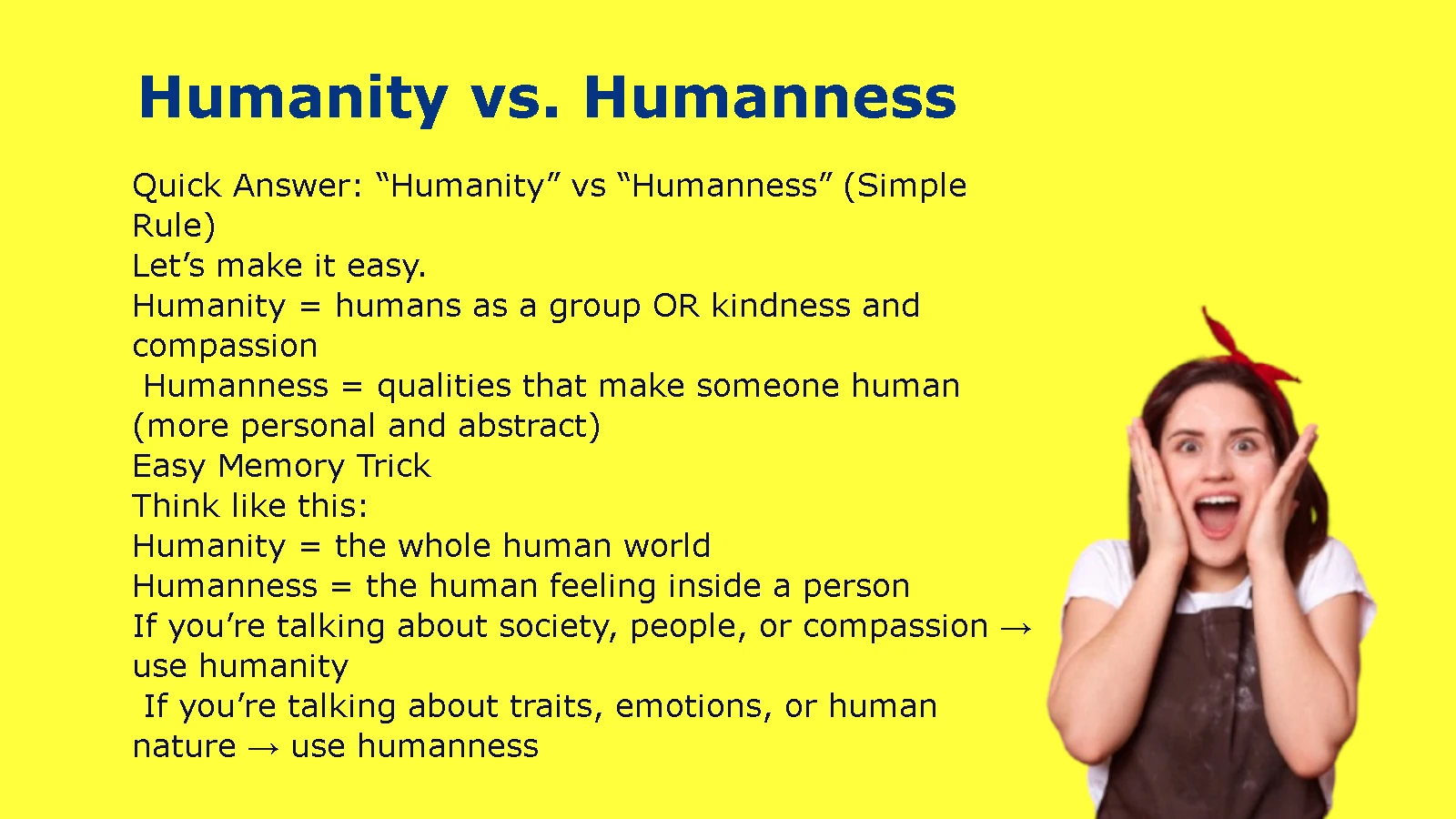
Quick Answer: “Humanity” vs “Humanness” (Simple Rule)
Let’s make it easy.
Humanity = humans as a group OR kindness and compassion
Humanness = qualities that make someone human (more personal and abstract)
Easy Memory Trick
Think like this:
- Humanity = the whole human world
- Humanness = the human feeling inside a person
If you’re talking about society, people, or compassion → use humanity
If you’re talking about traits, emotions, or human nature → use humanness
The Core Difference Between Humanity and Humanness
Here’s where most confusion comes from: both words relate to “being human,” but they operate on different levels.
Humanity (Big Picture Word)
“Humanity” is used when talking about:
- All humans collectively
- Human society or civilization
- Kindness, empathy, and compassion
Humanness (Inner Quality Word)
“Humanness” is used when talking about:
- Human traits or characteristics
- Emotional depth and vulnerability
- The “human side” of someone or something
Why This Confusion Happens
English often creates multiple words from the same root with subtle differences.
The issue is:
- Both come from human
- Both feel abstract
- Both are rarely explained in simple terms
- Native speakers sometimes blur the line too
So learners assume they are identical—but they’re not.
“Humanity” Explained Clearly (With Real Meaning)
At its core, humanity has two major meanings.
1. Humanity = All Humans
This refers to people as a whole.
Examples:
- “Climate change affects all of humanity.”
- “Space exploration benefits humanity.”
- “Technology is changing humanity.”
👉 Here, it means all humans on Earth.
2. Humanity = Kindness and Compassion
This is the emotional meaning.
Examples:
- “She showed great humanity during the crisis.”
- “We must not lose our humanity.”
- “His actions restored my faith in humanity.”
👉 Here, it means being kind, caring, and empathetic.
Key Insight
“Humanity” is used in global or moral contexts, not personal traits.
“Humanness” Explained Clearly (With Real Meaning)
Now let’s look at the less common but important word: humanness.
It focuses on what makes someone human at an individual level.
Standard Meaning
Humanness refers to:
- Emotions
- Imperfections
- Vulnerability
- Natural human behavior
Real Examples
- “The film captures the humanness of the character beautifully.”
- “Her humanness made her relatable.”
- “Even leaders should show their humanness.”
What It Really Means
It highlights the human side of someone, especially when they are powerful, idealized, or distant.
Side-by-Side Comparison Table
Here’s a quick breakdown you can scan anytime:
| Word | Meaning Focus | Usage Level | Example Context |
| Humanity | Humans as a whole / kindness | Global or moral | Society, ethics, compassion |
| Humanness | Human traits in individuals | Personal or emotional | Characters, behavior, feelings |
Real-Life Examples of “Humanity”
Let’s see how it works in real situations:
- “Humanity is facing a global crisis.”
- “We need to protect humanity from extinction-level risks.”
- “Her work reflects the best of humanity.”
👉 In all cases, it refers to people collectively or moral values.
Real-Life Examples of “Humanness”
Now compare:
- “The novel shows the humanness of a broken hero.”
- “Doctors need to balance professionalism with humanness.”
- “His humanness made him more relatable than his title.”
👉 Here, it focuses on personal traits and emotional depth.
The Biggest Mistake People Make
Here’s the real problem:
People use “humanity” and “humanness” as direct synonyms in all cases.
What Goes Wrong
- “Humanness” used in global contexts (sounds unnatural)
- “Humanity” used in emotional character analysis (too broad)
- Mixed usage creates awkward sentences
Example of Confusion
❌ “The movie shows the humanity of the villain.”
✔ “The movie shows the humanness of the villain.”
Why “Humanity” Is More Common
Here’s an important insight:
- Humanity = widely used
- Humanness = rare and literary
You’ll hear “humanity” in:
- News
- Education
- Politics
- Everyday speech
But “humanness” mostly appears in:
- Literature
- Psychology
- Philosophy
- Creative writing
When to Use Each Word (Simple Guide)
Use this quick decision system:
Use “Humanity” when:
- Talking about all humans
- Talking about society
- Talking about kindness or compassion
Use “Humanness” when:
- Describing emotional traits
- Writing stories or character analysis
- Highlighting human imperfections
Clear Alternatives You Can Use Instead
If you’re unsure, these safer options help:
Instead of humanness, you can say:
- “human nature”
- “human traits”
- “human side”
Instead of humanity, you can also say:
- “human race”
- “people”
- “society”
- “compassion”
Quick Decision Guide (Use This Instantly)
Still unsure? Use this:
- Global + people → Humanity
- Emotions + traits → Humanness
- Still confused → use a simpler phrase like human nature
Simple. Safe. Clear.
FAQ: Humanity vs Humanness
Is humanness a real word?
Yes, but it is less common and mostly used in formal or literary writing.
Can I always use humanity instead?
Not always. “Humanity” doesn’t always capture personal emotional traits.
Which one is more natural in daily English?
“Humanity” is far more common in everyday usage.
What is the safest choice?
If unsure, use “human nature” or “human qualities.”
Final Takeaway: The One Rule That Never Fails
Here’s the simplest way to remember it:
Humanity = all humans + kindness at scale
Humanness = human traits in individuals
Think of it like this:
- Humanity is the world
- Humanness is the person
And when in doubt, don’t overthink it—choose clarity over complexity.