Ever typed Trama vs. Trauma and wondered whether they mean the same thing? You’re not alone. This common spelling confusion often appears in writing, medical terminology, mental health discussions, and everyday communication, leaving many people unsure which word is correct.
The problem is that trauma is a widely recognized word related to emotional distress, psychological experiences, and physical injury, while trama is usually a misspelling or has a completely different meaning depending on the language or context. And here’s the kicker: using the wrong term can affect the clarity and credibility of your message.
But don’t worry—this confusion is easier to solve than you might think.
In this guide, you’ll learn the difference between Trama vs. Trauma, their meanings, correct usage, common spelling mistakes, and real-world examples. You’ll also discover how these terms are used in healthcare, psychology, language learning, and professional writing so you can choose the right word with confidence.
Whether you’re editing an article, writing an email, or simply improving your vocabulary, this breakdown will help you avoid mistakes and communicate more accurately. Let’s dive in.
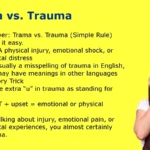
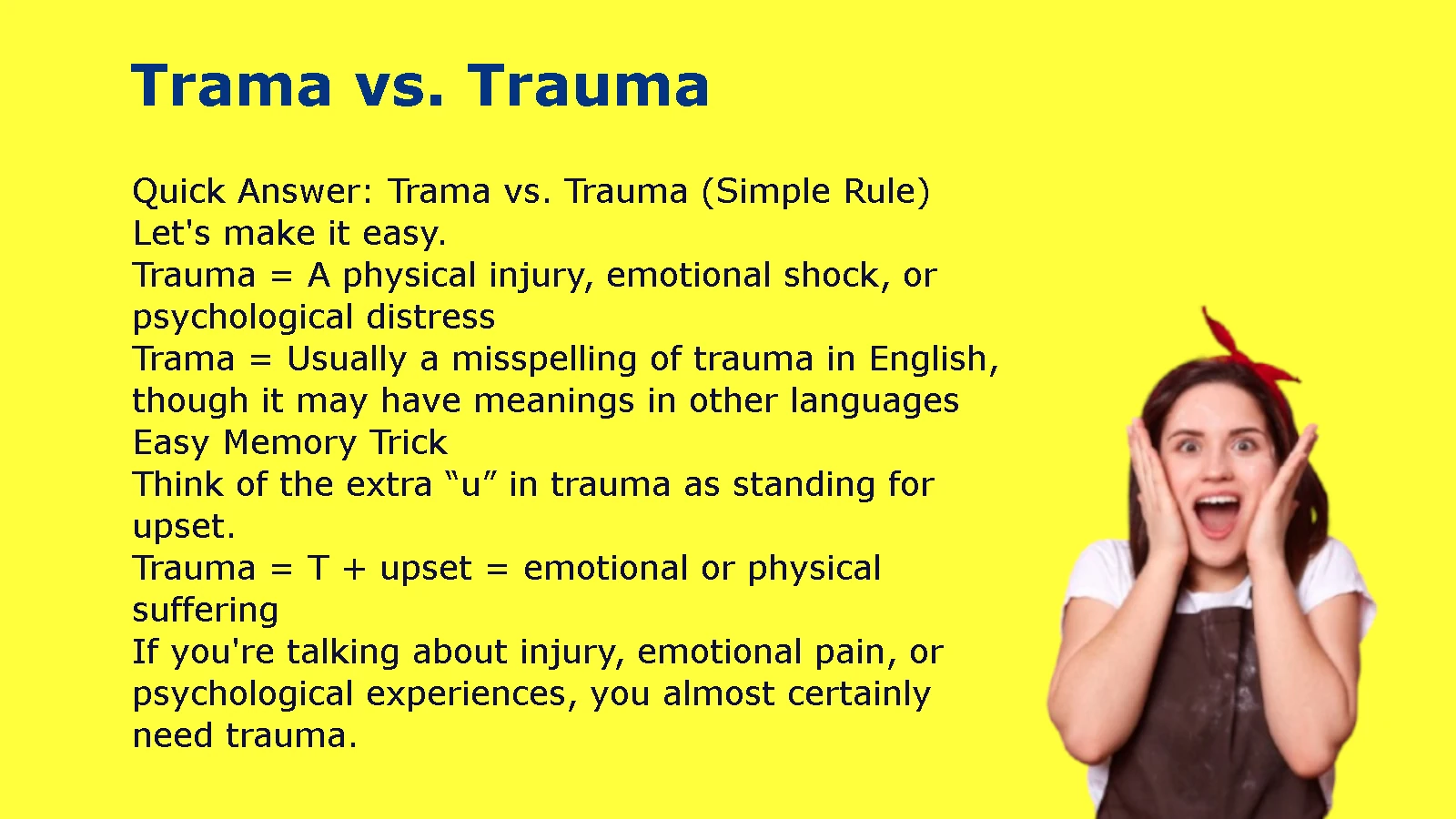
Quick Answer: Trama vs. Trauma (Simple Rule)
Let’s make it easy.
Trauma = A physical injury, emotional shock, or psychological distress
Trama = Usually a misspelling of trauma in English, though it may have meanings in other languages
Easy Memory Trick
Think of the extra “u” in trauma as standing for upset.
Trauma = T + upset = emotional or physical suffering
If you’re talking about injury, emotional pain, or psychological experiences, you almost certainly need trauma.
How People Actually Use “Trama” and “Trauma”
This confusion often happens because the words look nearly identical.
In Everyday Writing
People may accidentally type:
- “She experienced severe trama.”
- “The accident caused emotional trama.”
Both examples should use trauma.
In Online Communication
Autocorrect doesn’t always catch the mistake.
Fast typing and spelling errors often lead people to write trama unintentionally.
In Professional Settings
Using the wrong spelling can reduce credibility, especially in:
- Medical reports
- Academic writing
- Mental health discussions
- Workplace communications
Why This Happens
- Only one letter differs
- Both words look believable
- Many people pronounce them similarly
The Language Logic Behind Trama vs. Trauma
To understand the difference, it helps to know where the words come from.
Trauma Has a Clear English Meaning
The word trauma comes from the Greek word meaning wound or injury.
Over time, English expanded its meaning to include:
- Physical injuries
- Emotional wounds
- Psychological distress
What About Trama?
In standard English dictionaries, trama is generally not recognized as a common English word with the same meaning as trauma.
However, in some languages, such as Spanish and Italian, trama can have different meanings related to:
- Plot
- Storyline
- Fabric structure
- Weaving patterns
Key Insight
When writing in English about emotional or physical suffering, trauma is the correct choice.
“Trauma” Explained Clearly (With Examples)
At its core, trauma refers to a deeply distressing experience or serious injury.
Physical Trauma
Doctors often use trauma to describe bodily injuries.
Examples:
- “The patient suffered trauma after the car accident.”
- “Head trauma requires immediate medical attention.”
Emotional Trauma
Trauma can also affect emotions and mental health.
Examples:
- “She experienced trauma after losing her home.”
- “Childhood trauma can influence adult behavior.”
Psychological Trauma
Some experiences leave lasting mental effects.
Examples:
- “The event caused severe psychological trauma.”
- “Therapy helped him process the trauma.”
Key Takeaway
Whenever you’re discussing injury, distress, or emotional suffering, use trauma.
“Trama” Explained Clearly (With Examples)
Now let’s examine the word that causes confusion.
In English
Most of the time, trama is simply a misspelling of trauma.
Incorrect:
- “He is recovering from emotional trama.”
- “The accident caused physical trama.”
Correct:
- “He is recovering from emotional trauma.”
- “The accident caused physical trauma.”
In Other Languages
In some languages, trama has legitimate meanings.
Examples include:
- A movie plot
- The storyline of a novel
- The weave of a fabric
Key Insight
If you’re writing in English and discussing injuries or emotional suffering, avoid trama.
The Biggest Mistake People Make
The most common error is assuming the two words are interchangeable.
What Goes Wrong
Someone writes:
“Her trama affected her for years.”
Readers may:
- Assume it’s a typo
- Question the writer’s accuracy
- Become distracted from the message
Real Scenario (Case Study)
A student submits an essay discussing childhood trauma.
Throughout the paper, they repeatedly write:
“Childhood trama.”
The professor notices the mistake immediately.
Outcome
- Reduced professionalism
- Lower writing quality
- Possible point deductions
Lesson
Always double-check the spelling when discussing trauma-related topics.
Side-by-Side Comparison Table
| Word | Meaning | Correct in English? | Common Usage |
| Trauma | Physical or emotional injury | Yes | Medical, psychological, everyday English |
| Trama | Usually a misspelling of trauma | No (in most English contexts) | Mainly appears as a typo |
Real-Life Examples of “Trauma”
Let’s look at correct usage.
Common Situations
- “The soldier experienced emotional trauma.”
- “The hospital specializes in trauma care.”
- “The accident resulted in severe trauma.”
- “She sought counseling for childhood trauma.”
What They Mean
All examples refer to physical or emotional injury.
Mini Scenario
A doctor says:
“The patient suffered trauma during the collision.”
Everyone understands the reference to injury.
Real-Life Examples of “Trama”
Now compare.
Common Situations
You might see:
- “The event caused trama.”
- “She is healing from trama.”
What They Mean
In English, these are spelling mistakes.
Mini Scenario
An employee writes:
“The customer experienced emotional trama.”
A manager reviews the document and corrects it to:
“The customer experienced emotional trauma.”
Regional and Language Differences
Language usage changes around the world.
In English-Speaking Countries
The standard word is always:
Trauma
In Spanish
Trama often means:
- Plot
- Narrative structure
- Story development
In Italian
Trama can refer to:
- Storyline
- Fabric weave
In International Communication
People may accidentally transfer spellings from one language to another.
Key Tip
If you’re writing in English, use trauma when discussing injuries or emotional experiences.
How to Avoid Confusion Every Time
Want to remember the difference permanently?
Check the Meaning
Ask yourself:
“Am I talking about injury, distress, or emotional suffering?”
If yes, use trauma.
Remember the “U”
The letter U can remind you of:
- Upset
- Unpleasant experiences
- Emotional upheaval
Proofread Carefully
Pay extra attention in:
- Essays
- Emails
- Medical documents
- Professional reports
Why This Works
Most mistakes happen because writers type quickly and skip proofreading.
What to Say Instead (When Needed)
If you’re discussing trauma but want more specific wording, consider these alternatives.
For Emotional Experiences
- Emotional distress
- Psychological injury
- Mental suffering
- Emotional pain
For Physical Injuries
- Injury
- Bodily harm
- Physical damage
- Wound
Quick Tip
Even when using alternatives, trauma remains the most widely recognized term.
Quick Decision Guide (Use This Instantly)
Follow this simple checklist:
Talking about injury? → Trauma
Talking about emotional suffering? → Trauma
Writing in English? → Trauma
Writing “trama” by mistake? → Correct it to trauma
Simple. Reliable. Done.
FAQ: Trama vs. Trauma
Is “trama” a real English word?
Generally no. In most English writing, it is considered a misspelling of trauma.
Does trauma only refer to mental health?
No. Trauma can refer to both physical injuries and psychological distress.
Why do people confuse trama and trauma?
Because the words look nearly identical and differ by only one letter.
Can trama be correct in another language?
Yes. In some languages, trama refers to a plot, storyline, or fabric weave.
Which spelling should I use in English?
Use trauma whenever you’re discussing injury, distress, or emotional suffering.
Case Study: A Costly Spelling Error
A healthcare organization published an online article about mental health awareness.
Throughout the article, the writer accidentally used:
“Trauma” in some places and “trama” in others.
What Happened
Readers noticed the inconsistency.
Several commented about the spelling errors.
Result
- Reduced credibility
- Lower perceived expertise
- Additional editing costs
Fix
The organization corrected every instance of:
“Trama”
to
“Trauma”
The article immediately appeared more professional.
Key Facts You Should Remember
- Trauma is the correct English word.
- Trauma can be physical, emotional, or psychological.
- Trama is usually a spelling mistake in English.
- Some other languages use trama with different meanings.
- The missing letter “u” changes the entire meaning.
- Professional writing should always use the correct spelling.
Final Takeaway: The One Rule That Never Fails
Here’s the truth.
The difference between Trama vs. Trauma is much simpler than many people think. In English, trauma is the word you need when discussing physical injuries, emotional suffering, or psychological distress.
Meanwhile, trama is usually just a typo or a word borrowed from another language with an entirely different meaning.
So remember this simple rule:
Injury or emotional pain → Trauma
Not trauma-related in English → Double-check before using trama
One missing letter may seem small, but it can completely change how your writing is perceived. When accuracy matters, always choose the correct spelling.
Because when it comes to “Trama vs. Trauma,” precision makes all the difference.