Have you ever come across Hemmed vs Unhemmed and wondered what the difference actually is? Whether you’re shopping for clothing, reading a sewing guide, or discussing garment alterations, these two terms can be confusing if you’re unfamiliar with their meaning.
The confusion is understandable. Many people search for hemmed meaning, unhemmed meaning, and hemmed vs unhemmed difference because the terms are closely related but describe completely different fabric finishes. And here’s the kicker: choosing the wrong option can affect the appearance, durability, and fit of a garment.
But don’t worry—understanding the distinction is easier than you might think.
In this guide, you’ll learn the difference between Hemmed vs Unhemmed, discover the hemmed definition and unhemmed definition, and see practical examples of each. You’ll also find answers to common questions such as what does hemmed mean, what does unhemmed mean, hemmed vs unhemmed pants, and which is better: hemmed or unhemmed.
By the end, you’ll know exactly when to choose a hemmed garment, when an unhemmed finish makes sense, and how to use these terms correctly in everyday conversations about clothing and tailoring.
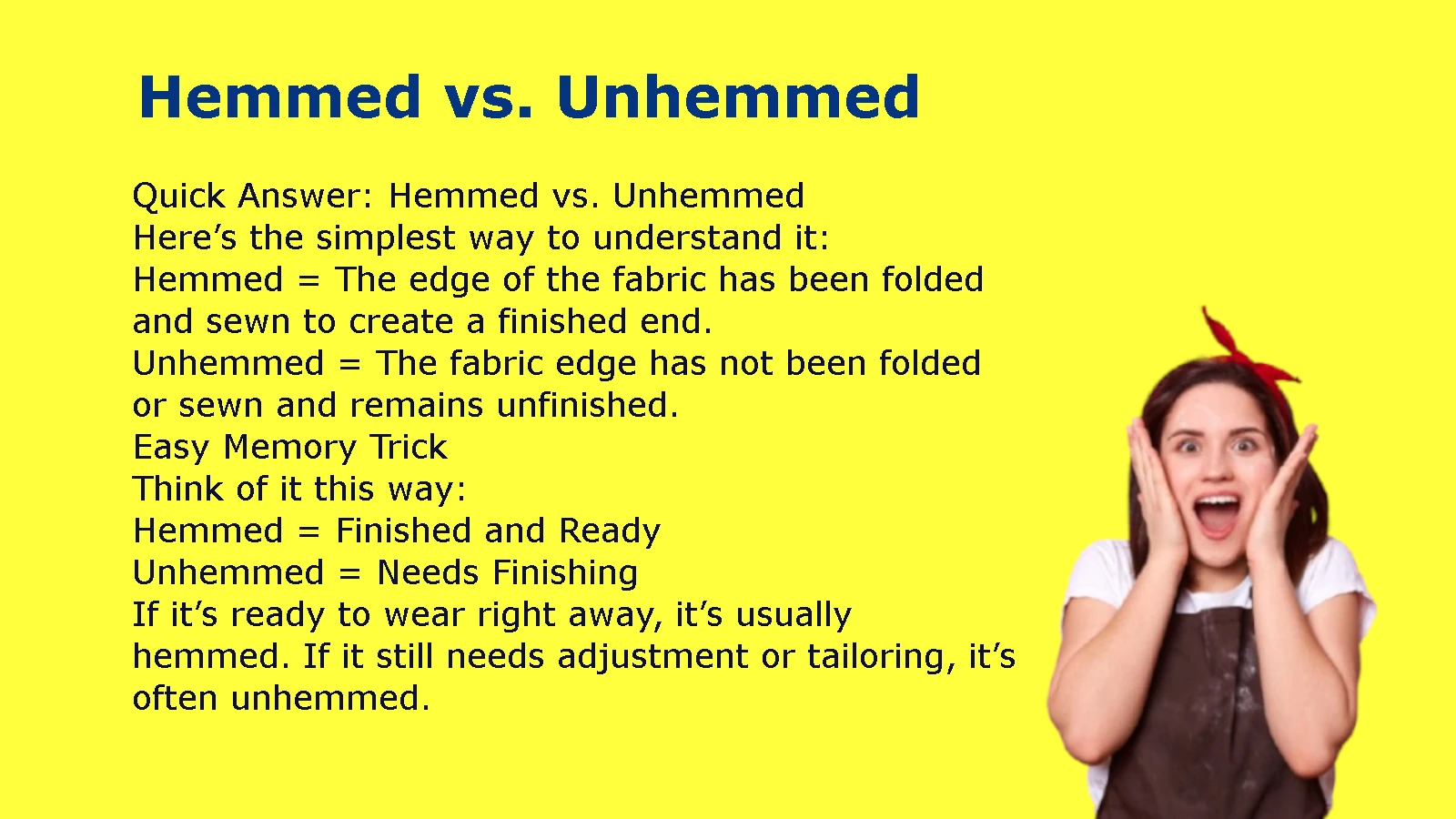
Quick Answer: Hemmed vs. Unhemmed
Here’s the simplest way to understand it:
Hemmed = The edge of the fabric has been folded and sewn to create a finished end.
Unhemmed = The fabric edge has not been folded or sewn and remains unfinished.
Easy Memory Trick
Think of it this way:
Hemmed = Finished and Ready
Unhemmed = Needs Finishing
If it’s ready to wear right away, it’s usually hemmed. If it still needs adjustment or tailoring, it’s often unhemmed.
What Does “Hemmed” Mean?
A hem is the folded and stitched edge found at the bottom of clothing or fabric items.
The purpose of hemming is to:
- Prevent fabric from fraying
- Create a clean appearance
- Improve durability
- Adjust garment length
When clothing is hemmed, it has already been finished by the manufacturer or tailor.
Common Examples of Hemmed Items
- Dress pants
- Jeans
- Skirts
- Dresses
- Curtains
- Sleeves
What Hemmed Clothing Looks Like
At the bottom edge, the fabric is folded inward and stitched securely. This creates a neat, polished appearance that is ready for immediate use.
What Does “Unhemmed” Mean?
An unhemmed garment has not yet had its bottom edge folded and stitched.
Instead, the fabric remains unfinished so that the wearer can customize the length before hemming.
Why Manufacturers Sell Unhemmed Clothing
Not everyone has the same height.
For example:
A 5’6″ person and a 6’2″ person may buy the same pair of dress pants. By leaving them unhemmed, the pants can be tailored to fit each individual perfectly.
Common Examples of Unhemmed Items
- Dress trousers
- Formal pants
- Custom suits
- Tailor-made garments
- Specialty curtains
What Unhemmed Clothing Looks Like
The bottom edge may appear unfinished or longer than needed because it is designed to be altered later.
The Main Difference Between Hemmed and Unhemmed
At its core, the difference is simple:
| Feature | Hemmed | Unhemmed |
| Finished Edge | Yes | No |
| Ready to Wear | Yes | Usually No |
| Requires Tailoring | No | Usually Yes |
| Custom Length | Limited | Highly Customizable |
| Professional Appearance | Immediate | After Tailoring |
Key Insight
Hemmed items prioritize convenience.
Unhemmed items prioritize customization.
Why Hemming Matters
Many people underestimate how much proper length affects appearance.
A well-hemmed pair of pants can:
- Look more professional
- Improve comfort
- Prevent fabric dragging
- Create a better silhouette
On the other hand, poorly fitted lengths can make even expensive clothing look awkward.
Example
Imagine wearing dress pants that bunch heavily around your shoes.
The pants may be high quality, but the excessive length makes them appear sloppy.
A proper hem solves the problem instantly.
When to Choose Hemmed Clothing
Hemmed clothing is often the best choice when convenience matters most.
Choose Hemmed If:
- You want to wear the item immediately
- Your height fits standard sizing
- You do not want tailoring costs
- You prefer a quick purchase
Real-Life Example
You need dress pants for an event tomorrow.
Buying hemmed trousers allows you to wear them right away without visiting a tailor.
When to Choose Unhemmed Clothing
Unhemmed clothing is ideal when fit is the top priority.
Choose Unhemmed If:
- You want a custom fit
- Standard lengths don’t fit you well
- You are buying premium dress pants
- You already work with a tailor
Real-Life Example
A businessman purchasing high-end wool trousers may prefer unhemmed pants so they can be tailored to the exact length needed.
The Advantages of Hemmed Clothing
Many shoppers appreciate the simplicity of ready-to-wear garments.
Benefits
Immediate Use
No waiting for alterations.
Lower Overall Cost
You avoid tailoring expenses.
Convenience
Perfect for last-minute purchases.
Consistent Appearance
The manufacturer has already finished the garment.
Best For
- Everyday wear
- Casual clothing
- Quick shopping needs
The Advantages of Unhemmed Clothing
Although it requires extra work, unhemmed clothing offers unique benefits.
Benefits
Perfect Length
The garment can be adjusted precisely.
Professional Fit
Tailoring creates a more polished look.
Better for Unusual Heights
Especially useful for very tall or short individuals.
Greater Flexibility
You decide the final break and length.
Best For
- Business attire
- Formal clothing
- Custom wardrobes
Common Uses for Hemmed and Unhemmed Pants
Pants are where this distinction appears most often.
Hemmed Pants
Usually found in:
- Jeans
- Khakis
- Casual trousers
- Ready-to-wear dress pants
Unhemmed Pants
Usually found in:
- Suit trousers
- Luxury dress pants
- Custom-made garments
Why Tailors Prefer Unhemmed Pants
Every customer has different proportions.
An unfinished pant leg allows the tailor to create the most flattering fit possible.
Hemmed vs. Unhemmed Curtains
The terms also apply to home décor.
Hemmed Curtains
- Finished edges
- Ready to hang
- Cleaner appearance
Unhemmed Curtains
- Customizable length
- Useful for unusual window sizes
- Often used in DIY projects
Example
If your windows are taller than standard sizes, unhemmed curtains can be trimmed and finished to fit perfectly.
The Biggest Mistake Buyers Make
Many shoppers purchase unhemmed clothing without realizing it requires tailoring.
What Happens
They receive the item.
The length is too long.
The garment cannot be worn comfortably without alterations.
How to Avoid This
Always check the product description.
Look for terms such as:
- Hemmed
- Finished hem
- Ready to wear
- Unhemmed
- Requires hemming
A quick check can prevent disappointment.
Side-by-Side Comparison
Here’s a quick overview:
| Category | Hemmed | Unhemmed |
| Ready to Wear | Yes | No |
| Tailoring Needed | Rarely | Usually |
| Custom Fit | Limited | Excellent |
| Convenience | High | Moderate |
| Professional Tailoring Potential | Moderate | High |
| Cost After Purchase | Lower | Often Higher |
How Tailoring Changes Unhemmed Clothing
Tailors do much more than simply shorten fabric.
They can adjust:
- Pant break
- Overall length
- Style preference
- Shoe clearance
- Professional appearance
Popular Pant Break Options
- No break
- Slight break
- Medium break
- Full break
The ideal choice depends on personal style and occasion.
How to Tell if an Item Is Hemmed
Before buying, inspect the bottom edge.
Signs of a Hemmed Item
- Visible stitching
- Folded fabric edge
- Clean finish
Signs of an Unhemmed Item
- Unfinished edge
- Excess fabric length
- No folded seam
If shopping online, product descriptions usually indicate the status clearly.
FAQ: Hemmed vs. Unhemmed
Is hemmed clothing better?
Not necessarily. Hemmed clothing is more convenient, while unhemmed clothing offers greater customization.
Can unhemmed pants be worn immediately?
Usually not. Most unhemmed pants are intentionally longer and designed for tailoring.
Why do expensive dress pants come unhemmed?
Manufacturers leave them unfinished so customers can achieve a perfect fit.
Is hemming expensive?
Basic hemming is usually one of the least expensive tailoring services.
Can hemmed clothing be altered?
Yes. Tailors can often shorten or adjust existing hems if needed.
Real-Life Scenario: Choosing the Right Option
Imagine two shoppers purchasing dress trousers.
Shopper A
Needs pants for a wedding tomorrow.
Best choice: Hemmed pants
Why?
They can be worn immediately.
Shopper B
Wants premium trousers for long-term professional use.
Best choice: Unhemmed pants
Why?
A tailor can create a perfect custom fit.
Lesson
The right choice depends less on the garment and more on your goals.
Key Facts to Remember
- Hemmed means finished and sewn.
- Unhemmed means unfinished and awaiting tailoring.
- Hemmed clothing is ready to wear.
- Unhemmed clothing allows customization.
- Dress trousers are commonly sold unhemmed.
- Tailoring creates a more precise fit.
- Always check product descriptions before purchasing.
Final Takeaway: Which Should You Choose?
The debate between hemmed vs. unhemmed isn’t about which option is better. It’s about which option fits your needs.
If convenience is your priority, choose hemmed clothing. It arrives finished, polished, and ready to wear immediately.
If achieving the perfect fit matters most, unhemmed clothing is often the smarter choice. The extra tailoring step allows you to customize the garment to your exact measurements and style preferences.
A simple rule can help:
Want it now? Choose hemmed.
Want it perfect? Choose unhemmed.
Understanding this distinction can help you shop with confidence, avoid costly mistakes, and ensure your clothing looks exactly the way you want it to.