Have you ever wondered whether “Wifes vs. Wives” is simply a spelling mistake or two different forms of the same word in English? This is a very common confusion among English learners because the two words look almost identical, yet only one letter changes their meaning and correctness in grammar.
In simple terms, “wives” is the correct plural form of “wife,” used when referring to more than one married woman, while “wifes” is not a standard English word and is considered a common spelling error. Even though they may look similar, only “wives” is accepted in formal writing, communication, and everyday usage.
This confusion often appears in searches like wives meaning, wifes vs wives difference, plural of wife, and common English spelling mistakes, especially among learners trying to improve their grammar accuracy and vocabulary skills. It also connects with broader topics such as irregular plurals, spelling rules, and English word formation patterns.
If you’ve ever paused while writing a sentence like “the wives of the kings gathered together,” you’re not alone—this is one of those tricky English cases where spelling rules change unexpectedly in plural form.
In this guide, you’ll learn the clear difference between wifes and wives, why the correct plural changes from “f” to “v,” real-life usage examples, grammar rules, and simple memory tricks so you never confuse them again.
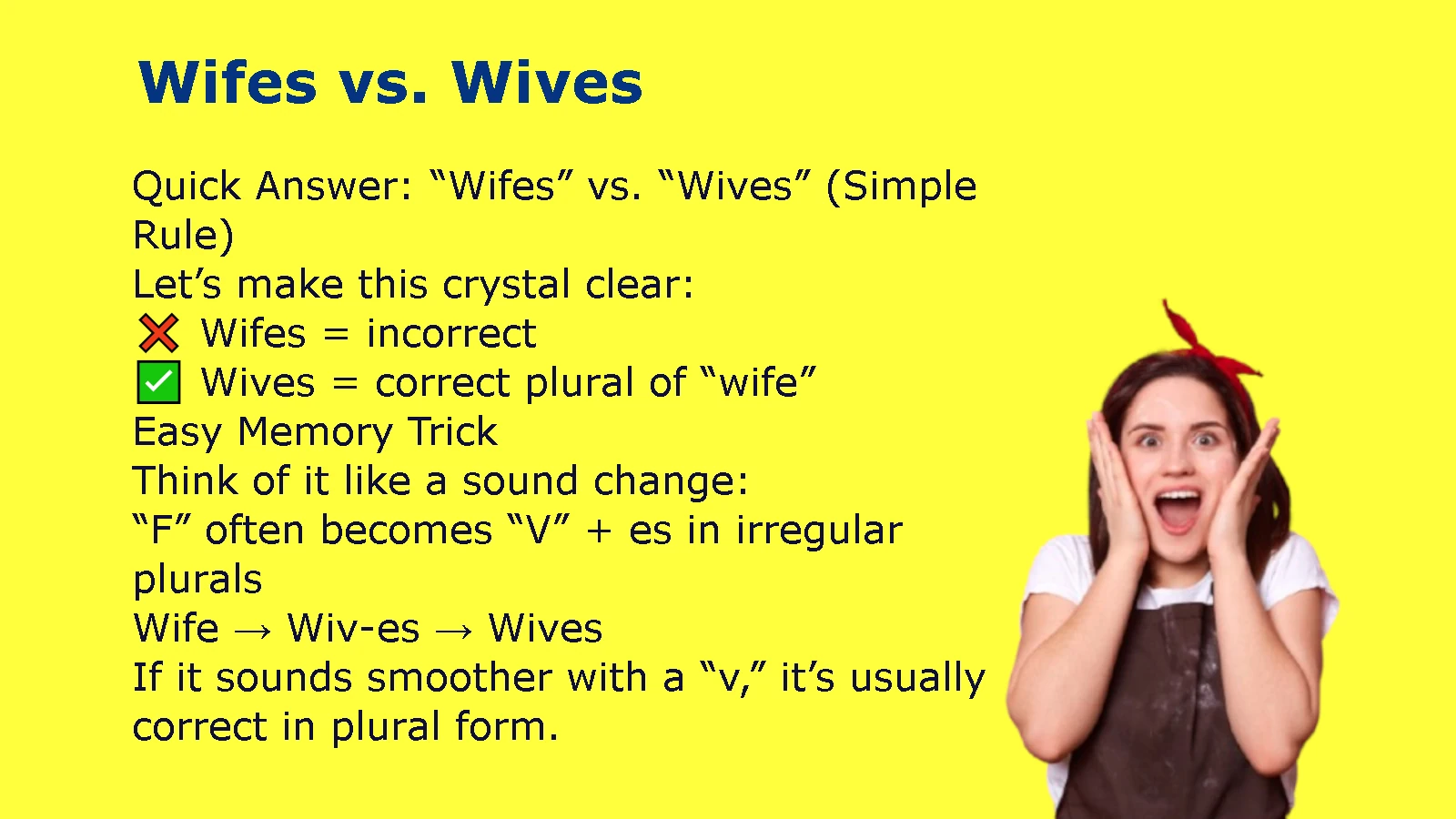
Quick Answer: “Wifes” vs. “Wives” (Simple Rule)
Let’s make this crystal clear:
- ❌ Wifes = incorrect
- ✅ Wives = correct plural of “wife”
Easy Memory Trick
Think of it like a sound change:
- “F” often becomes “V” + es in irregular plurals
- Wife → Wiv-es → Wives
If it sounds smoother with a “v,” it’s usually correct in plural form.
Why “Wifes” Is Wrong in Standard English
Here’s the core issue:
English does not always use “-s” or “-es” for plurals. Some words follow historical pronunciation shifts.
What happens in “wife”
- Singular: wife
- Old plural pattern: “wifes” (historically used in very old English)
- Modern English evolved to: wives
Key Insight
“Wifes” feels logical—but English is not always logical. It follows sound evolution, not simple addition rules.
The Grammar Logic Behind “Wives”
To understand it properly, think about sound transformation, not spelling addition.
F → V Rule Pattern (Common in English)
Many English nouns ending in -f or -fe change when pluralized:
- wife → wives
- knife → knives
- life → lives
- leaf → leaves
Why this happens
Historically, English speakers softened pronunciation for smoother speech. Over time, spelling adapted to match pronunciation.
“Wife” to “Wives” Explained Simply
Let’s break it down:
Singular:
- wife (one married woman)
Plural:
- wives (more than one married woman)
Simple transformation logic:
wife → change “f” sound → “v” sound → add “-es” → wives
Common Mistake People Make with “Wifes”
Here’s where real confusion happens.
What goes wrong
People assume:
Just add “-s” like most English words
So they write:
- ❌ two wifes
- ❌ my wifes are here
Correct usage
- ✅ two wives
- ✅ my wives are here
Real-Life Examples of “Wives”
Let’s make it practical.
Everyday Usage
- “Both wives attended the wedding ceremony.”
- “He is visiting his wives this weekend.”
- “The story is about three wives living in different cities.”
Mini Scenario
You’re talking about a family:
“His two wives are planning a surprise.”
No confusion. Only “wives” is correct.
Why English Changes “F” to “V” in Plurals
This is where the language gets interesting.
Sound Principle
English prefers smoother transitions between sounds:
- “f-s” is harsh
- “v-s” flows better
So:
- wife → wives
- knife → knives
Key Takeaway
It’s not random—it’s pronunciation-driven evolution.
Side-by-Side Comparison Table
| Word Form | Singular | Plural | Correct? |
| Wife | wife | ❌ wifes | ❌ Wrong |
| Wife | wife | wives | ✅ Correct |
Related Irregular Plurals You Should Know
If you struggle with “wives,” these follow the same pattern:
- knife → knives
- life → lives
- wolf → wolves
- leaf → leaves
Pattern Rule
If a word ends in -f or -fe, always check if it changes to -ves.
Real-World Confusion Example
Imagine this situation:
A student writes:
“My parents and their wifes went on vacation.”
What happens next
- Teacher marks it wrong
- Student is confused
- Meaning is understood—but grammar is incorrect
Correct version
“My parents and their wives went on vacation.”
Why People Still Search “Wifes”
This is actually important for SEO understanding:
Reason 1: Typing error
People naturally type “wifes” because it follows normal plural logic.
Reason 2: Autocorrect confusion
Some tools don’t correct it properly.
Reason 3: Spoken influence
People hear “wives” but don’t see the spelling often.
How to Never Confuse “Wifes” vs. “Wives” Again
Use these simple rules:
Golden Rule
If the singular ends in “f” or “fe”, check for “ves” plural
Quick Test
Ask yourself:
Does it sound smoother with a “v”?
If yes → use “wives”
What to Say Instead (Clear Usage Guide)
Always use:
- “my wife” (singular)
- “my wives” (plural, if applicable contextually)
- “their wives”
- “both wives”
Never use:
- ❌ wifes
FAQ: “Wifes” vs. “Wives”
Is “wifes” ever correct?
No. In modern standard English, it is always incorrect.
Why do people still write “wifes”?
Because they apply normal plural rules (“add s”), but this word is irregular.
Is “wives” singular or plural?
“Wives” is the plural form of “wife.”
What is the easiest way to remember it?
Think:
wife → change f to v → add es → wives
Case Study: A Simple Mistake in Writing
A blog author once wrote:
“The king had multiple wifes in the story.”
Problem
- Grammatically incorrect
- Looks unprofessional
- Reduces credibility
Fix
“The king had multiple wives in the story.”
Just one letter change—but a huge difference in quality.
Key Facts You Should Remember
- “Wifes” is always incorrect in modern English
- “Wives” is the correct plural form of “wife”
- Many -f/-fe words become -ves in plural form
- English changes spelling based on pronunciation history
- Context does not change this rule
Final Takeaway: The One Rule That Never Fails
Here’s the simplest truth:
If a word ends in f or fe, don’t rush to add “s.” Check if it transforms into “ves.”
So:
- One wife → wife
- More than one → wives
- Never → wifes
Because in English, small letters carry big meaning—and “wives” is one of those small changes that makes your writing correct, natural, and confident.